South Tenerife is often described as one continuous stretch of hotels, beaches and seafront promenades. In reality, the resorts along this coast have distinct characteristics. Costa Adeje, Playa de las Américas and Los Cristianos have grown together, but they differ in their beaches, atmosphere, prices and ease of getting around.
Costa Adeje belongs to the municipality of Adeje, while Los Cristianos and much of Playa de las Américas are in the municipality of Arona. These boundaries are barely noticeable when walking along the coast, but understanding the differences helps you choose the best area for your stay.
The southwest is Tenerife’s main tourist area, with well-equipped beaches, a wide range of accommodation, restaurants, shopping centres and frequent transport connections. It is a practical choice for anyone looking for convenient facilities, mild winter temperatures and a beach holiday. Travellers who prefer forests, historic towns and less built-up landscapes may find the north of the island more appealing.
Costa Adeje: resorts, beaches and facilities
Costa Adeje covers a broad stretch of the southwest coast. Rather than a single town built around a historic centre, it consists of several tourist areas developed at different times.
San Eugenio and Puerto Colón are busy, centrally located areas. Here you will find holiday apartments, bars, water sports and boat trips. Fañabé has a similar feel, with a large, well-equipped beach and a promenade lined with restaurants and shops.
Further north, El Duque has more upmarket hotels, carefully maintained surroundings and generally higher prices. La Caleta lies at the northern end of the resort strip. It is smaller, with a partly rocky coastline and numerous restaurants.
Costa Adeje is particularly suitable for families, couples and anyone who wants easy access to beaches and facilities. Before booking, however, check the exact location of your accommodation: many properties sit on the hills behind the coast, which means steep walks back from the beach.
Playa de las Américas: the liveliest area
Playa de las Américas stretches between Costa Adeje and Los Cristianos and is the resort most closely associated with Tenerife’s nightlife. Nightclubs, pubs, shopping centres and late-night venues are concentrated mainly around Verónicas.
However, the atmosphere varies across Playa de las Américas. The area near Playa del Camisón and the so-called Golden Mile is more orderly and quieter than the nightlife streets. When choosing a hotel, check its street and neighbourhood as well as the resort name.
This is a good base if you want to get around mainly on foot, have plenty of places to eat and go out in the evening, and reach both Costa Adeje and Los Cristianos easily. It is less suitable for anyone seeking peace or a less built-up setting.
Los Cristianos: a harbour, beaches and more of a town feel
Los Cristianos was already a coastal settlement before tourism transformed southern Tenerife, although today it is densely built up. It still feels more like a working town, with permanent residents, year-round services and a fully operational harbour.
Ferries to La Gomera, La Palma and El Hierro leave from the harbour, alongside sightseeing boats and other excursion vessels. This makes it a particularly convenient base if you want to combine Tenerife with a visit to another island.
Los Cristianos beach is sheltered by the harbour and generally has calm water. Just to the north, Playa de Las Vistas links Los Cristianos with Playa de las Américas via a wide, flat promenade.
Compared with Costa Adeje, Los Cristianos has a greater proportion of apartments and accommodation aimed at the mid-range market, although prices vary considerably by season. The seafront area is easy to explore on foot, while some inland neighbourhoods climb the hills.
Which area should you stay in?
Your choice depends mainly on the type of holiday you want and the exact location of your accommodation.
Costa Adeje is the most comprehensive option for families and couples looking for resorts, well-equipped beaches and plenty of facilities. Fañabé and San Eugenio are busier, El Duque is more expensive, and La Caleta is more tucked away.
Playa de las Américas suits travellers who want nightlife, walkable surroundings and a central location within the resort strip. Streets near Verónicas can be noisy, while the Playa del Camisón area is generally quieter.
Los Cristianos is a good choice if you prefer a town with a harbour, everyday services and ferry connections. It is also a convenient base without a car.
The three areas are close together, so there is no need to change accommodation to explore them all. The promenade allows you to walk along much of the coast, while local buses, known as guaguas, connect the main resorts.
Beaches along the southern resort coast
The beaches are one of the main reasons to choose this part of Tenerife. Compared with much of the northern coast, southern beaches tend to have more facilities and are often sheltered by breakwaters.
Playa del Duque
Playa del Duque is in the more upmarket part of Costa Adeje. It has light-coloured sand, sunbeds and parasols for hire, showers, and restaurants and shops nearby. It is well maintained and convenient, surrounded by high-end hotels and facilities.
Playa de Fañabé and Torviscas
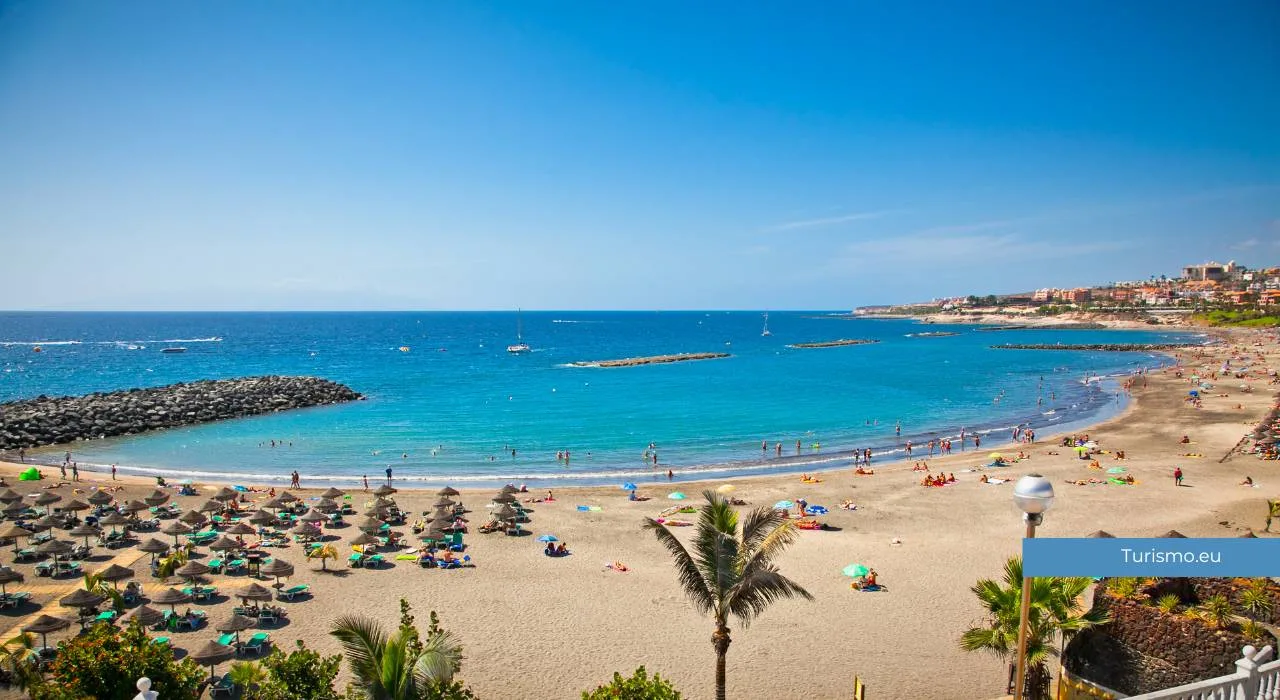
Fañabé and Torviscas form one of the busiest stretches of the coast. Both beaches have extensive facilities, while the seafront promenade is lined with bars, shops and tourist activities.
They suit anyone who wants to spend the day at the beach without going far from their accommodation. Those looking for peace may find them too crowded, particularly during peak holiday periods.
Playas de Troya
The two Troya beaches lie between Costa Adeje and Playa de las Américas. These urban beaches are surrounded by hotels and bars, are easy to reach and are generally busy.
Playa del Camisón
Playa del Camisón is a sheltered bay in the quieter part of Playa de las Américas, close to Los Cristianos. The sea is often calmer than along the island’s exposed coastline, making it a good option if you want beach facilities away from the centre of the nightlife.
Playa de Las Vistas and Los Cristianos
Playa de Las Vistas is wide, accessible and connected to the promenade linking Playa de las Américas with Los Cristianos. It is one of the most suitable beaches for families and people with reduced mobility.
Nearby Playa de Los Cristianos is smaller and sits beside the harbour. The boats make the setting less scenic, but its location is very convenient if you are staying in the town centre.
To compare these beaches with El Médano, Las Teresitas and the volcanic beaches of the north, see our guide to the best beaches in Tenerife.
La Caleta and the northern end of the resort coast
La Caleta lies beyond El Duque and Playa de La Enramada. The original settlement clusters around a small inlet, while upmarket hotels, villas and residential developments have been built in the surrounding area.
It is best known for its waterfront restaurants and coastal walks. There is no large sandy beach comparable to Fañabé or Las Vistas: the shoreline alternates between pebbles, rocks and small places where you can enter the water.
From La Caleta, you can continue on foot into the volcanic landscape of the Sitio de Interés Científico de La Caleta, a protected natural area. The paths cross exposed terrain with no shade, so bring water and wear suitable footwear.
Whale watching and boat trips
The waters between Tenerife and La Gomera are home to resident populations of pilot whales and bottlenose dolphins. Whale and dolphin watching trips depart mainly from Puerto Colón and Los Cristianos harbour.
Sightings of wild animals cannot be guaranteed, despite their regular presence. Choose authorised operators, boats with smaller groups and trips that respect the required viewing distances.
Trips vary in length: some focus on wildlife watching, while others include swimming stops or a cruise along the coast. Before booking, check the type of boat, passenger numbers and what the itinerary actually includes.
Siam Park
Siam Park is inland from the coast in Costa Adeje and is one of the Canary Islands’ main water parks. It has slides, pools, children’s areas and attractions ranging from gentle to high-adrenaline.
A visit generally takes a full day. Queues can be long during busy periods, so check prices, opening hours and entry arrangements before planning your visit.
It is an option mainly for families and water park enthusiasts, rather than an essential stop for understanding Tenerife.
Getting around South Tenerife
The seafront promenade links Los Cristianos, Playa de las Américas and much of Costa Adeje. Walking is often the simplest way to travel between nearby beaches and neighbourhoods, although the full distances are greater than they may appear on a map.
Local buses run frequently between the three resorts. Route 40 connects Tenerife South Airport with Los Cristianos and Costa Adeje bus station, while other routes serve La Caleta, Santa Cruz and various towns across the island. Check current timetables and routes on the TITSA website.
A car is not essential for a holiday focused on the coast. It becomes useful if you want to visit Mount Teide, the north or rural areas. Parking near the beaches can be difficult, and traffic on the TF-1 increases during rush hour.
What to see beyond the resort areas
The south offers a convenient base, but it represents only part of Tenerife’s variety. From the coast, you can plan days out in Teide National Park, the landscapes of Teno or the north of the island.
Allow enough time for the distances involved. Teide, Masca, Anaga and La Orotava are not quick detours from the beach: each area deserves a separately planned day trip.
If you want to organise excursions from a southern base, you can create a map of your itinerary and group stops by area.
Costa Adeje, Playa de las Américas or Los Cristianos?
Costa Adeje is the most comprehensive choice for resorts, facilities and well-equipped beaches. Playa de las Américas has the liveliest evenings and is easy to explore on foot. Los Cristianos offers a working harbour, good transport connections and more of a town atmosphere.
None of the three resorts is suited to travellers who want to spend their entire stay in natural surroundings. They are, however, practical bases for a beach holiday, especially in winter, with opportunities to explore other parts of Tenerife on day trips.
The difference comes down to more than the resort name. Before booking, check the actual distance to the beach, how steep the surrounding streets are, whether there are late-night venues nearby and which transport connections are available.