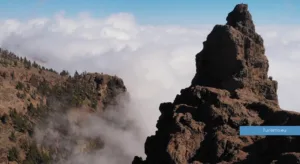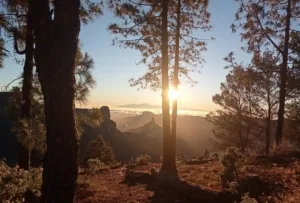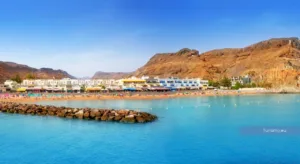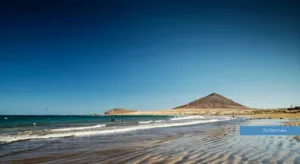
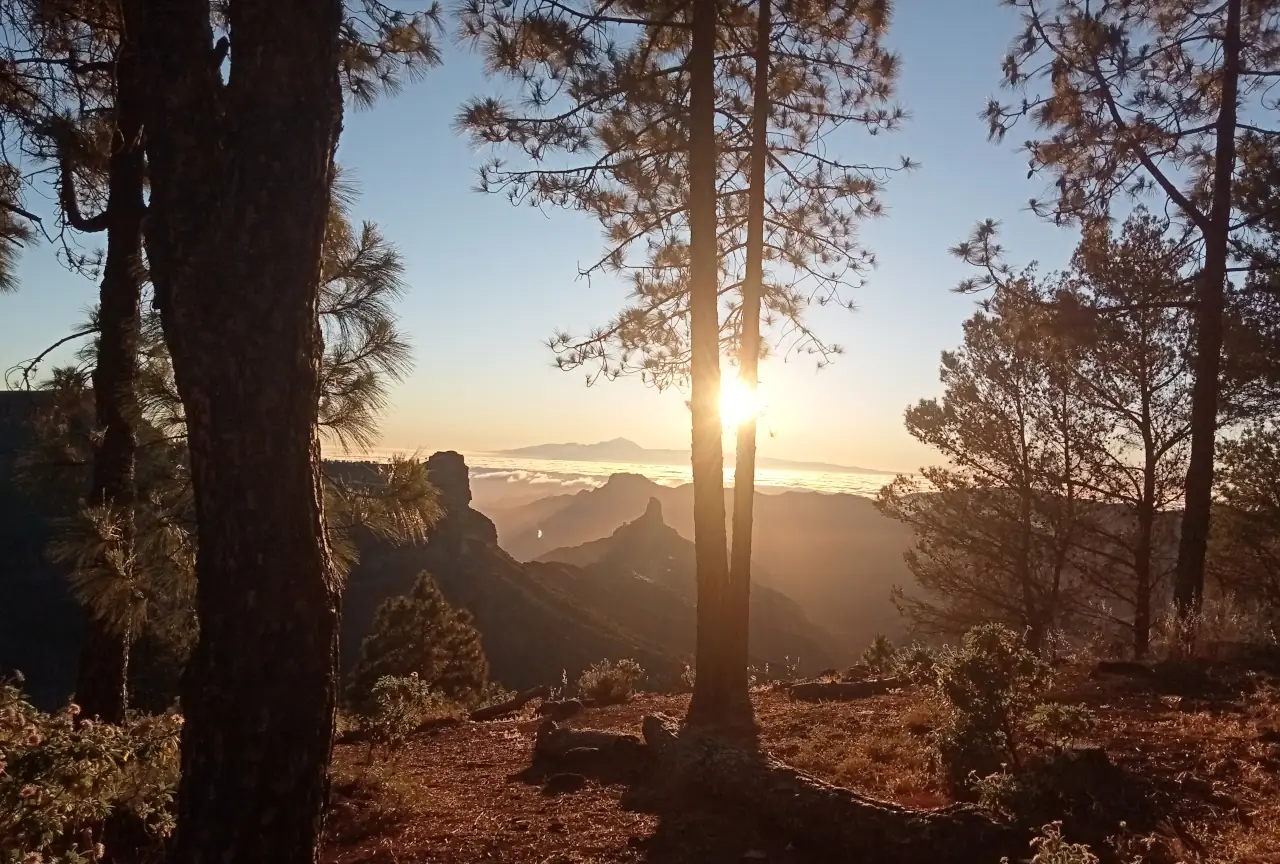
With its pine forests, mountains and valleys, the interior of Gran Canaria is less familiar to tourists and reveals a completely different landscape. It is one of my favourite parts of the island. Compared with Fuerteventura, the scenery offers a striking contrast, with forests, mountains and valleys that surprise anyone who associates the Canary Islands only with the sea.
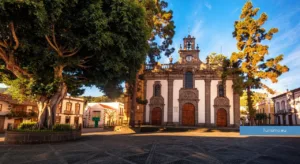
If you are setting out from Las Palmas, I recommend taking the GC-15 road through Santa Brígida and Vega de San Mateo, two lovely towns worth stopping in. You can take the opportunity to visit the market, which sells local fruit, vegetables, cheese and honey and is open on Fridays, Saturdays and Sundays.
Some inland roads are narrow. Check your route before leaving, as satnav does not always suggest the easiest option.
A landscape that changes with altitude
One of the most striking features of the interior is the variety of vegetation.
Within a few kilometres, cultivated valleys with almond and fruit trees give way to extensive Canary Island pine forests. This fire-resistant species is a defining feature of the island’s mountains.
Canary Island palms, chestnut trees and numerous endemic species also grow in the damper ravines, creating landscapes very different from those along the coast.
The Cabildo’s camping zones
For those travelling by motorhome or campervan, several free camping zones are available, and it is worth spending at least one night. With an advance reservation, you can stay for several days. There are barbecue facilities, which may only be used when fire restrictions allow, and some areas have toilets but no showers. Black-water disposal facilities are available.
These areas are very different from conventional campsites, but their natural surroundings make them well worth trying for the quiet and the scent of the forest.
Many are used by local residents at weekends and provide excellent starting points for walks and other outdoor activities.
The wooded areas are well maintained, and several dams form reservoirs in beautiful natural settings, such as Presa de las Niñas. One of the most attractive camping zones is located here. However, at the time of writing, some access roads are closed for maintenance, making it less straightforward to reach. Check conditions before setting out to avoid a long drive followed by having to turn back. This is a temporary situation; access is normally straightforward.
Llanos de la Pez
In the mountainous heart of Gran Canaria, Llanos de la Pez is one of the island’s best-known camping areas.
Surrounded by extensive pine woodland, it lies close to landmarks such as Roque Nublo and Pico de las Nieves. Picnic tables, barbecue facilities and trails make it suitable for a day outdoors or as a base for exploring the island’s interior.
On clear days, there are broad views of the surrounding mountains and the island’s volcanic landscape.
Presa de las Niñas
In the southwest of the island, Presa de las Niñas is particularly popular with visitors looking for peace and quiet.
The small reservoir and surrounding woodland create a distinctive setting. Tables, barbecues and open spaces make this a good place for a day in nature.
During winter and spring, the landscape becomes greener, and the contrast between the water and the surrounding mountains is particularly striking.
The reservoir does not always contain water. It serves as a water reserve, and during periods of drought the landscape can look very different from the photographs.
Corral de los Juncos
At more than 1,600 metres above sea level, this area has toilets, water and barbecues and is often used as a starting point for walks into Gran Canaria’s higher mountain areas.
On the clearest days, the views are wonderful: you can make out Roque Nublo and, on the horizon, the outline of Mount Teide.
If you are not staying in this camping zone, you can enjoy the panorama from the Mirador Degollada de Becerra or the Mirador de la Goleta.
A trail from here leads to Roque Nublo via Presa de Los Hornos.
Llanos de la Mimbre
Set within the Tamadaba pine forest, in the municipality of Agaete, Llanos de la Mimbre offers the chance to experience one of the island’s most beautiful natural environments.
Tamadaba forest is known for its Canary Island pines and spectacular ocean views. The area has toilets and water points.
Morro de Santiago
In the municipality of San Bartolomé de Tirajana, Morro de Santiago is one of the more basic areas.
Although supervised, it has no toilets, water or permanent barbecue facilities.
Altos del Pozo
This small camping zone in the municipality of Tejeda offers direct access to the island’s inland landscapes.
Facilities are limited, with no toilets or permanent water points. This gives it a quieter, more remote feel.
Bailico
Bailico also lies within the municipality of Tejeda and is one of the island’s least-equipped camping areas.
Its location among the inland pine forests makes it an interesting choice for those seeking peace and time in nature.
Llanos del Salado
Llanos del Salado is another of the most basic camping zones.
It allows camping in a protected natural setting but has no facilities. It offers a simple outdoor experience away from the busiest areas.
How to apply for a camping permit
Wild camping is not permitted: to stay in the authorised areas, you must apply for a permit from the Cabildo de Gran Canaria, the island authority responsible for managing these camping zones.
Access is free, but you must request your permit in advance through the Cabildo’s online portal. Places are limited and fill up quickly during peak periods.
One of the most popular areas is Tamadaba, in the natural park of the same name in the northwest of the island. Surrounded by Canary Island pines and overlooking the ocean, it is particularly appreciated for hiking and camping in natural surroundings.
Hiking trails
A network of hiking trails connects the different areas and provides access to remarkable places such as Roque Nublo, a natural monument at around 1,800 metres above sea level in the centre of the island. Access to the trail requires an online reservation through the official reservasroquenublo.com website.
How long does it take to reach the interior?
The drive from Las Palmas to Vega de San Mateo takes around 30 minutes. Allow between 45 minutes and an hour to reach Tejeda or the main inland camping areas. Tamadaba and the northwestern areas generally take a little longer, around an hour and a quarter from the capital.
Even if you are staying in southern resorts such as Maspalomas or Playa del Inglés, much of the interior can be reached in under an hour. This makes the mountains suitable both for day trips and for spending a few nights in natural surroundings.
A different way to experience Gran Canaria
For anyone who enjoys nature and hiking and wants to explore the island’s interior, these areas offer some of Gran Canaria’s most rewarding experiences.
They reveal a side of the island often missed by visitors who stay on the coast and help show just how varied its landscapes are.