A journey through archipelagos, beaches, villages and Mediterranean landscapes
The Greek islands offer a wide variety of landscapes, atmospheres and travel experiences. From the whitewashed villages of the Cyclades to the green shores of the Ionian Islands, and from Crete to the Dodecanese, each island group has its own distinctive character.
The Greek islands are scattered across the Aegean and Ionian seas. This map brings together the guides already published on Turismo.eu, helping you locate the different archipelagos, islands and places to include in your journey.
The Greek islands are far from uniform. Each group has different landscapes, architecture and transport connections. Knowing where they are located will help you build a realistic itinerary without spending too much time on long ferry journeys and frequent transfers.
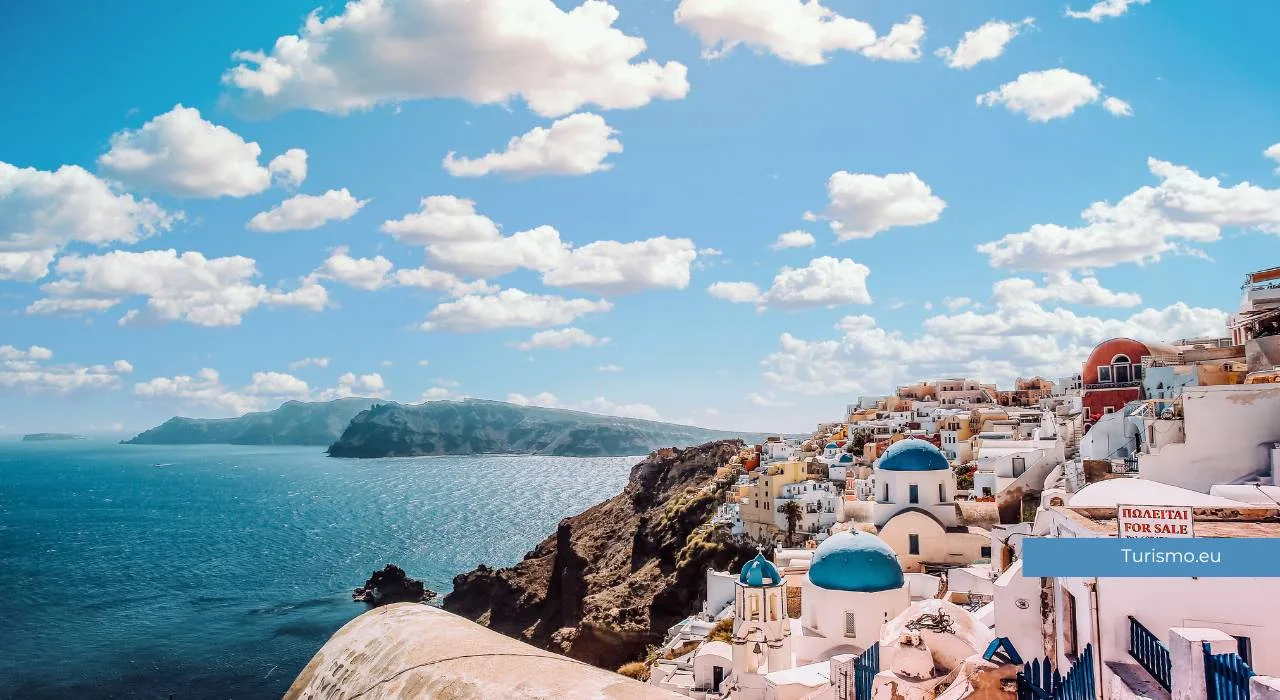
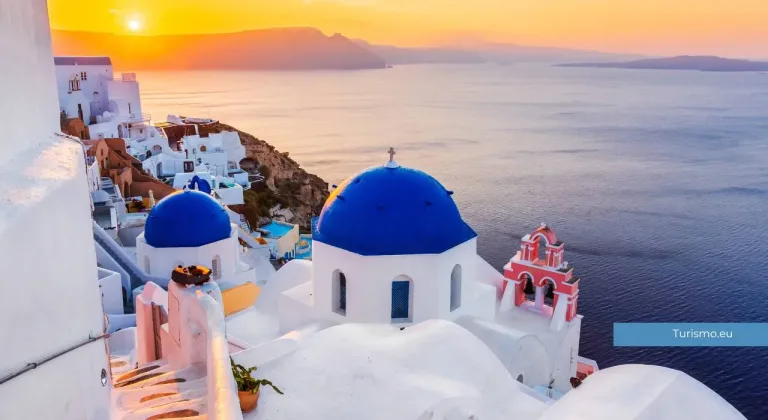
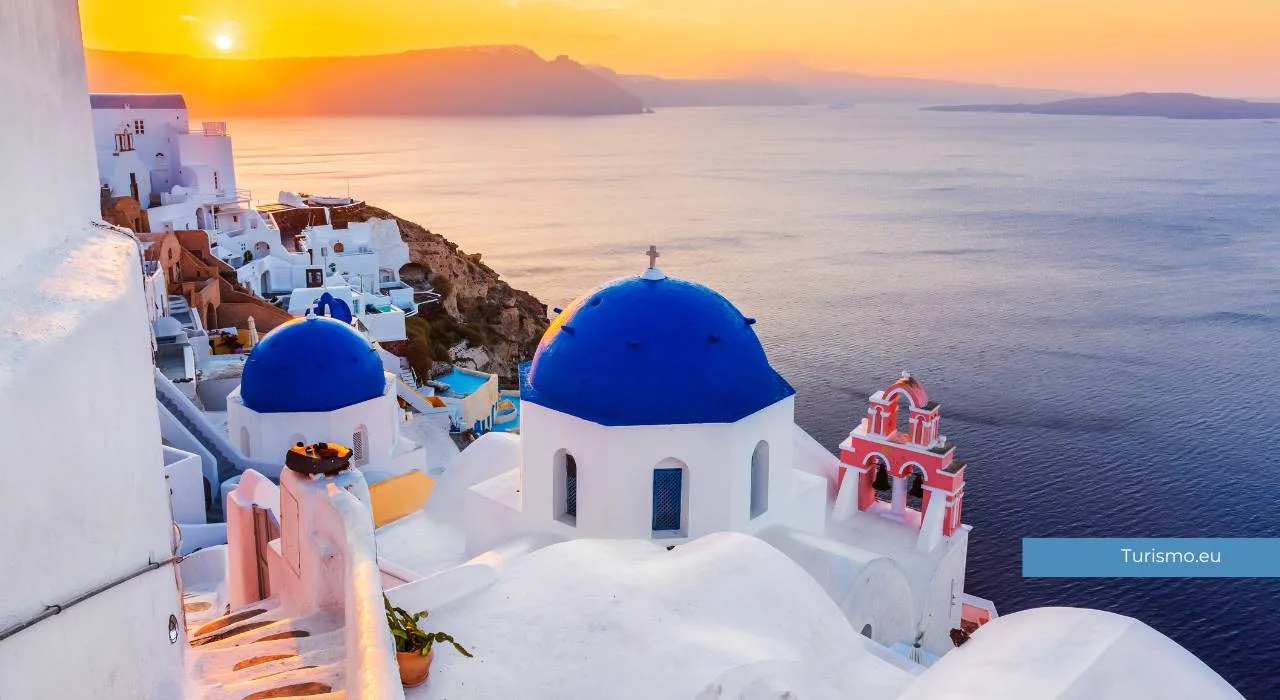
The Cyclades lie in the central Aegean Sea and embody the most familiar image of the Greek islands: whitewashed houses, colourful domes, stone walls and hills descending towards the sea.
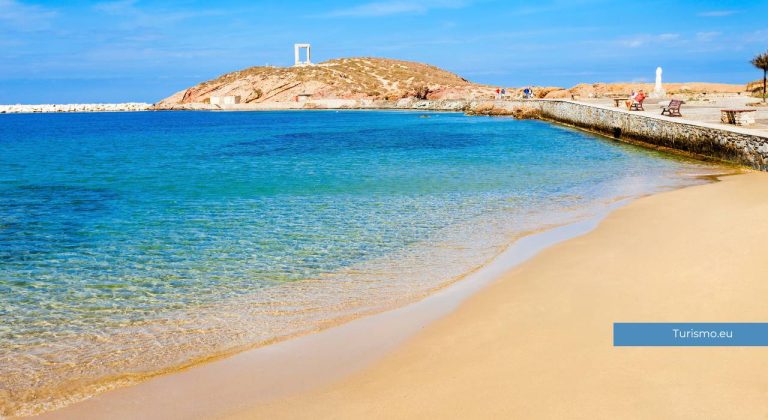
Santorini and Mykonos are the best-known islands, but the archipelago includes many places with very different characteristics. Naxos combines beaches, inland villages and mountains; Paros alternates lively towns with sheltered bays; while Milos is shaped by the forms and colours of its volcanic rocks.
Amorgos, Sifnos, Serifos and Folegandros are better suited to a quieter and more intimate journey.
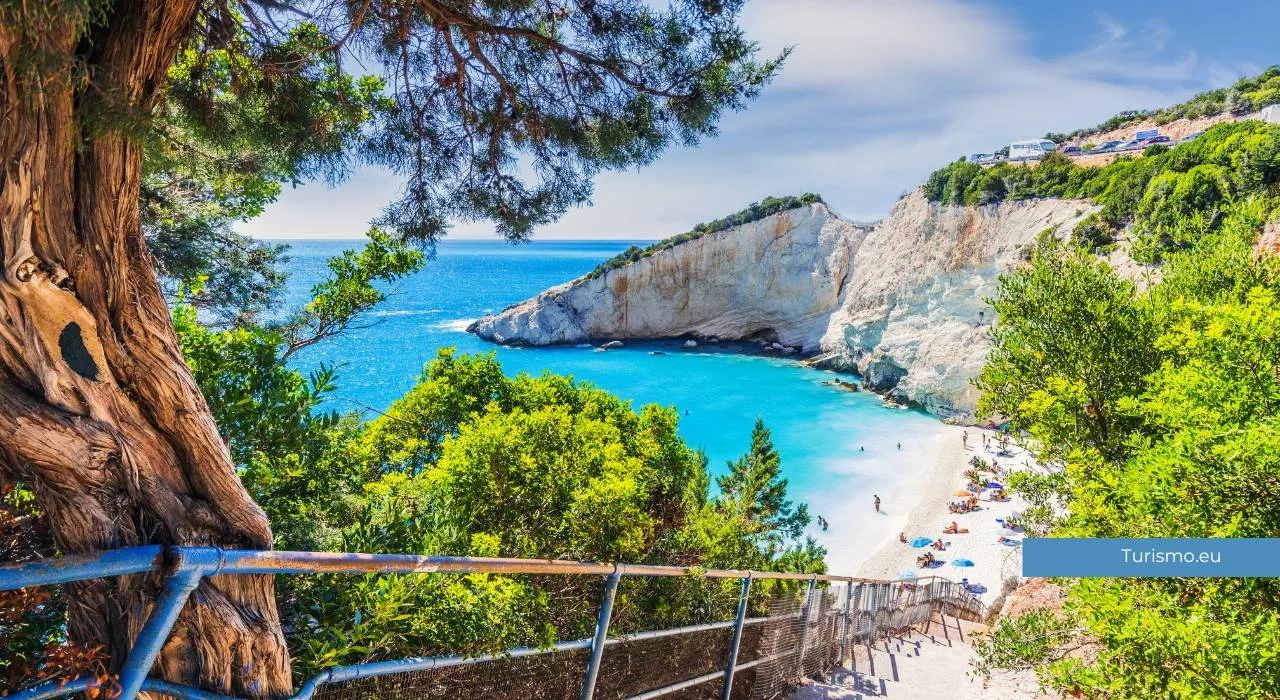
Located off the western coast of Greece, the Ionian Islands have more abundant vegetation than much of the Aegean. Olive groves, limestone headlands and clear waters characterise Corfu, Kefalonia and Lefkada in particular.
Corfu has a historic centre shaped partly by centuries of Venetian rule. Kefalonia is one of the largest islands in the archipelago and requires several days to explore. Lefkada is connected to the mainland by a bridge, so it can be reached without taking a ferry.
Zakynthos is best known for its coastline and the nesting grounds of loggerhead sea turtles, while Ithaca is associated with Odysseus and offers a more secluded setting.
The Dodecanese stretches across the south-eastern Aegean, close to the Turkish coast. Its islands bear traces of different historical periods, with fortresses, medieval settlements, ancient ruins and Italian-influenced architecture.
Rhodes is the largest island in the group and combines the medieval old town, the archaeological site of Lindos, beaches and inland landscapes. Kos is flatter and can also be explored by bicycle. Karpathos has mountainous terrain and villages that retain a very distinctive cultural identity.
For a less predictable journey, consider Astypalaia, Tilos, Nisyros, Leros or Symi. Visitors arriving in Symi are greeted by a striking succession of colourful neoclassical houses surrounding the harbour.
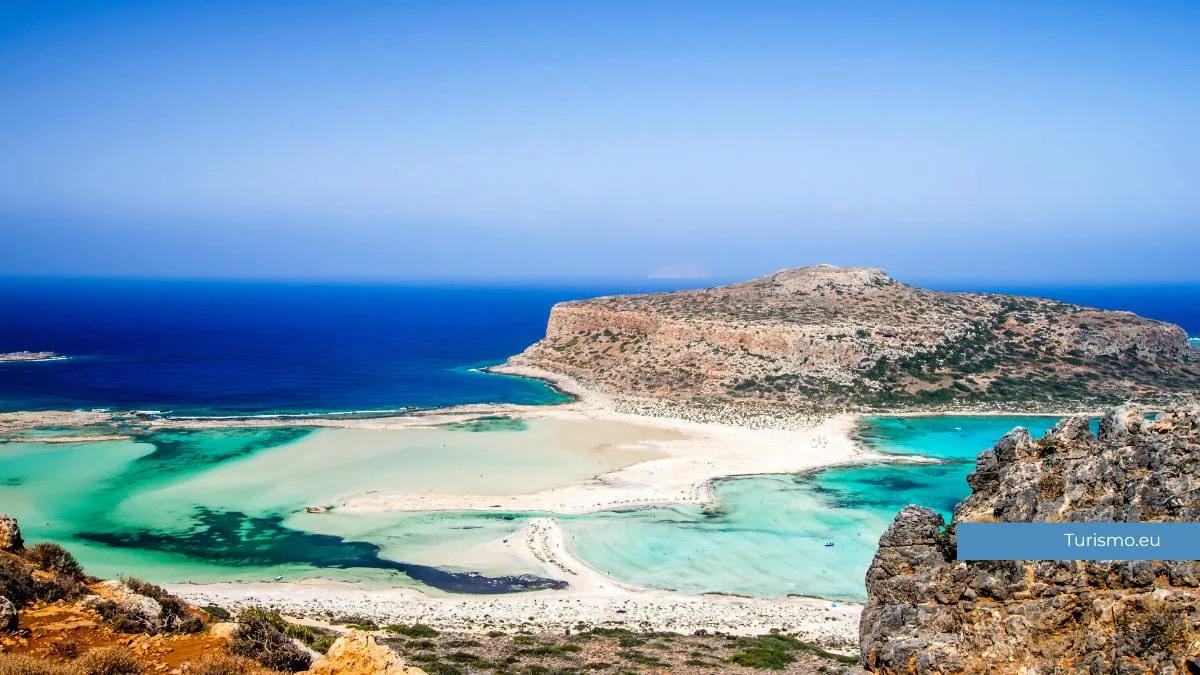
Crete is the largest Greek island and is almost a complete journey in itself. Distances are greater than they may initially appear on a map, so it is better to focus on one or two areas, especially if you only have a week.
The northern coast is home to the main cities and most transport connections. Heraklion is the starting point for visiting the Minoan Palace of Knossos; Chania has a historic Venetian harbour; and Rethymno combines a compact old town with a long stretch of coastline.
The interior is dominated by mountains, gorges and plateaus, while the south has more isolated towns and stretches of coast that can also be reached by sea. The best-known places include Balos Lagoon, Elafonissi, Samaria Gorge and Vai Beach.
Ideal for: a journey of at least one week, road trips, archaeology, hiking and varied landscapes.
The Sporades lie in the north-western Aegean Sea. They are characterised by pine forests reaching the coast, sheltered bays and clear waters.
Skiathos is the liveliest island and has the archipelago’s main airport. Skopelos has a greener landscape and numerous small churches. Alonissos is closely linked to the National Marine Park of Northern Sporades, an important protected area for the Mediterranean monk seal.
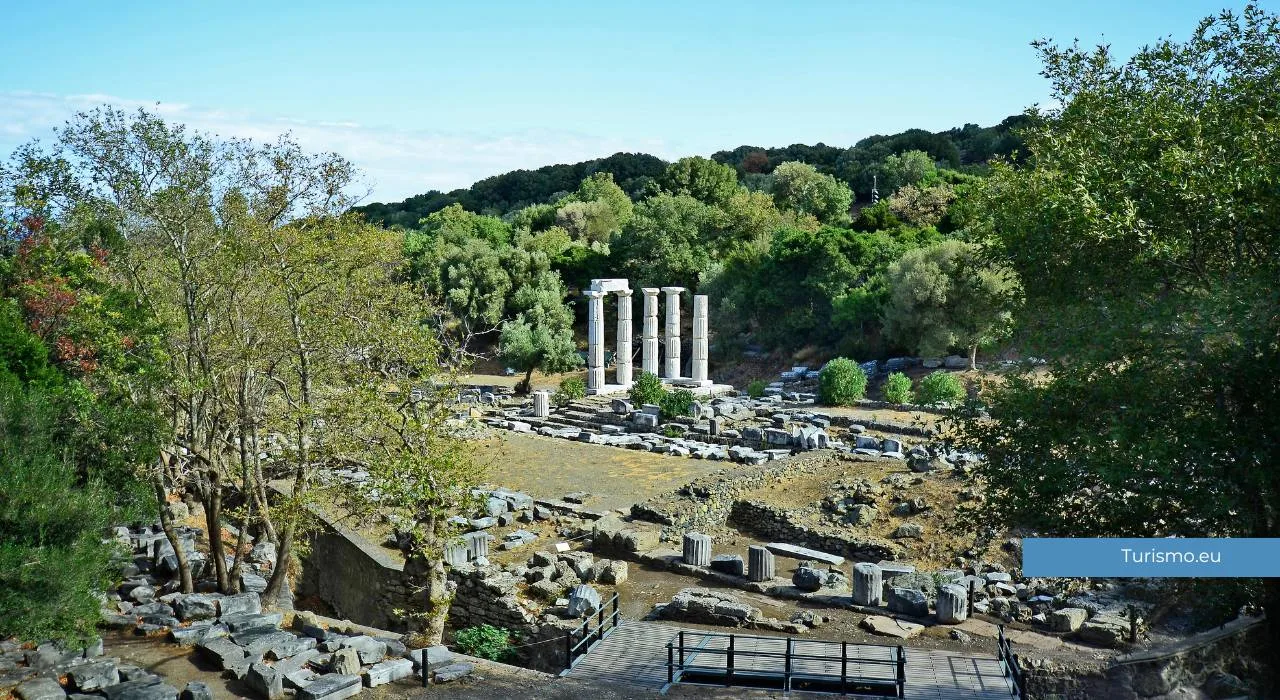
The North Aegean Islands are spread far apart and cannot always be easily combined in a single itinerary. Lesbos, Chios, Samos, Lemnos, Ikaria and Samothrace each have a clearly defined geographical and cultural character.
Lesbos is known for its olive groves, villages and petrified forest. Chios preserves medieval villages associated with mastic cultivation. Samos combines mountainous landscapes, archaeological sites and stretches of coastline. Ikaria is known for its villages, thermal springs and strong sense of community.
Further north, Samothrace stands out for its mountains, streams and natural pools, offering a side of Greece far removed from the classic beach-island image.
The Saronic Islands lie close to Athens and can be reached from the port of Piraeus. This makes them suitable for extending a stay in the capital or planning a short itinerary without long transfers.
Aegina is home to the Temple of Aphaia and is known for its pistachios. Hydra has no cars and features a harbour surrounded by stone buildings. Poros is separated from the Peloponnese by a narrow stretch of water, while Spetses combines historic mansions, pine forests and small bays.
There is no single island that is best for everyone. Your choice will depend on the time of year, the length of your trip and what you would like to do.
Santorini, Naxos, Crete, Corfu and Rhodes are easy to include in a first itinerary because they have good transport connections and a wide range of visitor facilities.
Santorini is suitable for a short, scenic stay; Naxos for those seeking variety between coast and interior; Crete for a longer journey; Corfu for green landscapes and historic towns; and Rhodes for combining beaches with cultural visits.
Milos, Lefkada, Kefalonia, Crete and Karpathos offer some of Greece’s most impressive coastlines, although each has different characteristics.
Milos has bays shaped by volcanic rock; Lefkada has broad beaches beneath high cliffs; Kefalonia offers coves surrounded by vegetation; Crete provides an exceptionally wide choice; and Karpathos has stretches of coast that are more exposed to the wind.
Andros, Naxos, Crete, Amorgos and Samothrace are particularly interesting for travellers who do not want to spend their entire trip on the coast. Historic paths, gorges, mountains and inland villages reveal a different side of the islands.
Tilos, Ikaria, Astypalaia, Serifos, Sifnos and Amorgos can be good alternatives, especially outside August. They are not necessarily deserted, however, and some have limited accommodation, so booking in advance is still advisable.
Choosing a single island allows you to travel at a slower pace and explore its interior as well as its coast. This option is particularly suitable for Crete, Rhodes, Corfu, Kefalonia and Naxos.
Island hopping works best when you remain within the same archipelago. Two islands are generally enough for a one-week trip. With ten days or two weeks, you can combine three islands, provided there are direct ferry connections between them.
Adding too many stops means spending a considerable part of your journey at ports, waiting for ferries and travelling between destinations.
Ferries connect the islands with Athens, mainland Greece and other ports across the Aegean and Ionian seas. Routes and frequencies change throughout the year and generally increase during the summer.
Piraeus is the main port for many Aegean islands. Rafina is particularly convenient for Andros, Tinos and Mykonos, while Lavrio operates several routes to the Cyclades and the north-eastern Aegean.
Several islands also have an airport. Some can be reached on direct international flights, while others require a connection in Athens or Thessaloniki.
It depends on the island. On Santorini, Mykonos and smaller islands, you can usually get around by bus, taxi or scooter. On Crete, Kefalonia, Corfu, Rhodes and Naxos, a car provides greater freedom, especially when visiting beaches, villages and inland areas.
Before taking a rental car onto a ferry, always check the rental company’s terms and conditions.
The most balanced periods are generally May to June and September to early October. Temperatures are suitable for outdoor activities, and many destinations are less crowded than in August.
July and August offer the widest choice of ferry connections, but they also bring higher prices and large numbers of visitors to the best-known islands. The meltemi, a northerly wind that is particularly common during summer, can affect parts of the Aegean.
In spring, the islands are greener and well suited to hiking, although the sea may still be cool. During winter, ferry services are reduced and many seasonal businesses close. Larger islands with active year-round communities, such as Crete, Corfu, Rhodes and Lesbos, remain the most practical choices.
7-10 days → one island or two nearby islands
14 days → a more extensive itinerary without too many transfers
Guides, itineraries and travel ideas to help you choose your islands and plan every stage of your journey.