-
 Italiano
-
 English
Western Sicily combines historic cities, nature reserves, medieval towns, salt pans and coastal landscapes. Four days are enough for a first journey through the area, provided that the itinerary is organised carefully and does not include too many distant stops.
A car is the most practical option, particularly for reaching the Zingaro Nature Reserve, Erice and the Stagnone Lagoon. Palermo is the natural starting point, thanks to its airport and transport connections.
Day 1: Palermo
The first day is dedicated to Palermo, whose historic centre reflects the many cultures that have shaped Sicily.
The Norman Palace and Palatine Chapel provide an introduction to the city’s Arab-Norman heritage. From here, the route can continue towards Palermo Cathedral, Quattro Canti and Piazza Pretoria.
The historic markets are another important part of the city. Ballarò retains a strong connection with everyday life, while Vucciria has become increasingly associated with restaurants and evening entertainment.
Palermo is also a good place to try Sicilian street food, including panelle, arancine and sfincione. As the historic centre is extensive, it is better to choose a limited number of monuments and leave enough time for walking through its streets and markets.
Spending the first night in Palermo makes it possible to begin the following day without adding another transfer.
Day 2: Scopello and the Zingaro Nature Reserve
From Palermo, the itinerary continues towards the north-western coast and the Zingaro Nature Reserve.
The reserve extends between Scopello and San Vito Lo Capo. Its paths cross Mediterranean vegetation and connect several small coves with clear water and pebble beaches.
This stage requires most of the day. The trails are exposed to the sun and have very little shade, so suitable footwear, water and sun protection are essential. Before travelling, it is important to check opening conditions, access arrangements and any restrictions caused by weather or fire risk.
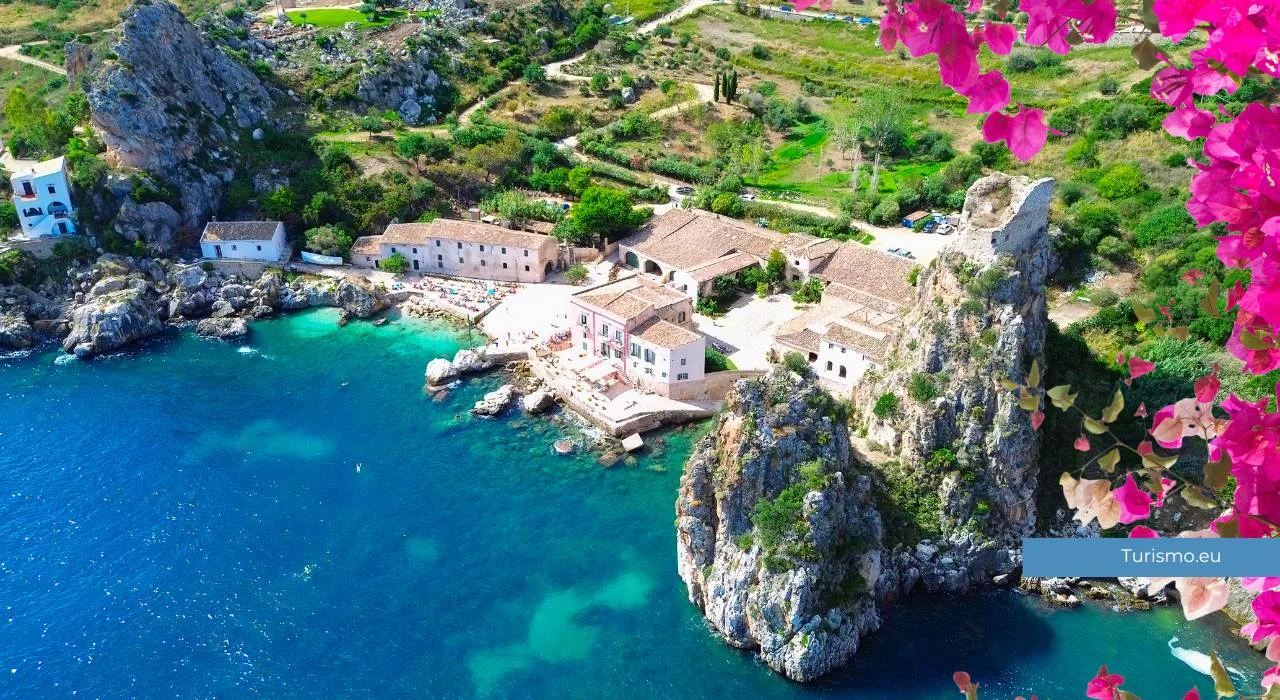
Scopello can be visited before or after the walk. The small village stands above the coast, while the nearby tuna fishery and sea stacks form one of the most recognisable landscapes in western Sicily.
After the visit, it is possible to stay near Scopello or continue towards Trapani, depending on the preferred pace and the availability of accommodation.
Day 3: Erice, Trapani and the salt pans
The third day begins in Erice, a medieval town standing on Mount San Giuliano above Trapani.
Its stone streets lead through a compact historic centre with churches, courtyards and viewpoints overlooking the coast and the surrounding countryside. Weather conditions can change quickly at this altitude, and the town is sometimes covered by cloud even when the coast is sunny.
Erice is also known for pastries made with almonds and ricotta, which can be found in several shops around the centre.
In the afternoon, the route descends towards Trapani. Depending on the available time, it is possible to walk through the historic centre before continuing south towards the salt pans.
The coastal landscape between Trapani and Marsala is characterised by shallow basins, windmills and salt mounds. The colours change throughout the day, but the area is especially striking in the late afternoon.
Trapani or Marsala are both practical places to spend the night.
Day 4: Marsala and the Stagnone Lagoon
The final day is dedicated to Marsala and the Stagnone Lagoon.
Marsala is internationally known for its fortified wine, but its historic centre also contains Baroque buildings, pedestrian streets and archaeological remains connected with the city’s ancient role in Mediterranean trade.
A short visit to the centre can be combined with a winery tour, although tastings should be booked in advance and organised carefully when travelling by car.
North of the city lies the Stagnone Lagoon, a shallow coastal environment containing salt pans, small islands and traditional windmills.
Mozia, founded by the Phoenicians, occupies one of the islands in the lagoon and can be reached by boat. Visiting the island requires additional time, so it should be included only if the return journey does not make the final day too demanding.
Alternatively, the trip can end with a walk along the lagoon and sunset over the salt pans.
Where to stay during the itinerary
Changing accommodation every night is not strictly necessary, but using two or three bases reduces driving time.
A practical arrangement is:
- first night in Palermo;
- second night near Scopello or in Trapani;
- third night in Trapani or Marsala.
Travellers who prefer fewer changes can spend the final two nights in Trapani and visit Marsala and the Stagnone Lagoon as a day trip.
When to follow this itinerary
Spring and early autumn are generally the most suitable periods for this route. Temperatures are more comfortable for walking, and the coast is usually less crowded than in July and August.
Summer is suitable for swimming but can make visits to Palermo, Erice and the Zingaro trails tiring during the hottest hours.
In winter, cities and towns remain accessible, but weather conditions may limit coastal walks and some tourist services may operate on reduced schedules.
Is four days enough for western Sicily?
Four days provide a useful introduction, but they do not cover the whole of western Sicily.
San Vito Lo Capo, the Egadi Islands, Segesta and other coastal areas would require additional days. Adding them to this itinerary would result in too much time spent driving and too little time at each destination.
For a first journey, concentrating on Palermo, the Zingaro coast, Erice, Trapani and Marsala creates a varied but manageable route.