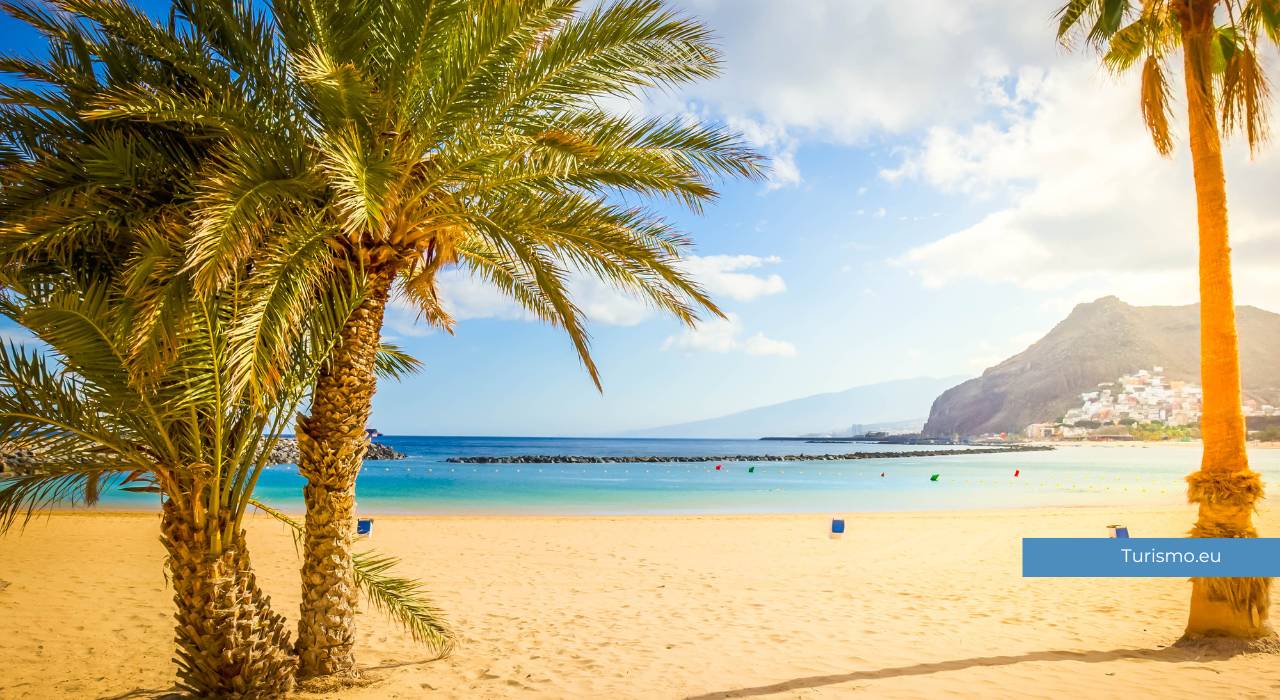


Tenerife has more than 300 kilometres of coastline, but its beaches vary considerably. Some lie beside the large resorts in the south, while others are enclosed by cliffs, lava formations and mountains descending towards the Atlantic.
The difference between northern and southern Tenerife is not simply the colour of the sand. Exposure to waves, wind, available facilities and sea conditions also change around the island.
The south has a greater number of equipped beaches protected by breakwaters, while volcanic beaches exposed to the Atlantic are more common along the northern coast. There are many exceptions, however, and visitors should always consider the characteristics of each beach and check the warning flag before entering the water.
The south: equipped and sheltered beaches
Southern Tenerife has the island’s greatest concentration of seaside resorts, accommodation and beaches with visitor facilities.
Many beaches are protected by breakwaters that reduce the force of the waves. This makes the area particularly convenient for families and travellers who want to spend most of the day by the sea.
Playa del Duque
Playa del Duque is located in Costa Adeje, in front of some of the area’s main hotels. It has pale grey sand, sunbed hire and a seafront promenade connected to the neighbouring beaches.
It is one of the most convenient choices for those looking for showers, restaurants and other facilities within easy reach. The surroundings are well maintained, although strongly oriented towards tourism.
Playa de Fañabé and Torviscas
Fañabé and Torviscas form one of the busiest stretches of Tenerife’s southern coast. The beaches are wide and well equipped, with a promenade lined with shops, bars and restaurants.
The water is generally sheltered, and numerous water-based activities are available along the beach. It can be difficult to find a quiet spot during the busiest periods, but the area is practical for visitors who want everything close at hand.
Playa de Troya
The beaches of Troya I and II lie between Costa Adeje and Playa de las Américas. They have volcanic sand and generally moderate waves due to their sheltered position.
They are suitable for travellers looking for an urban beach close to hotels, entertainment and activities. The surrounding area remains lively in the evening and is not the best option for those seeking isolation.
Playa de Las Vistas
Located between Los Cristianos and Playa de las Américas, Playa de Las Vistas is one of the largest and most accessible beaches in southern Tenerife.
The wide beach is protected by barriers, while the seafront promenade provides an easy connection between the two resorts. It is suitable for families and visitors with reduced mobility, although it can become very busy during the high season.
El Médano and the south-eastern coast
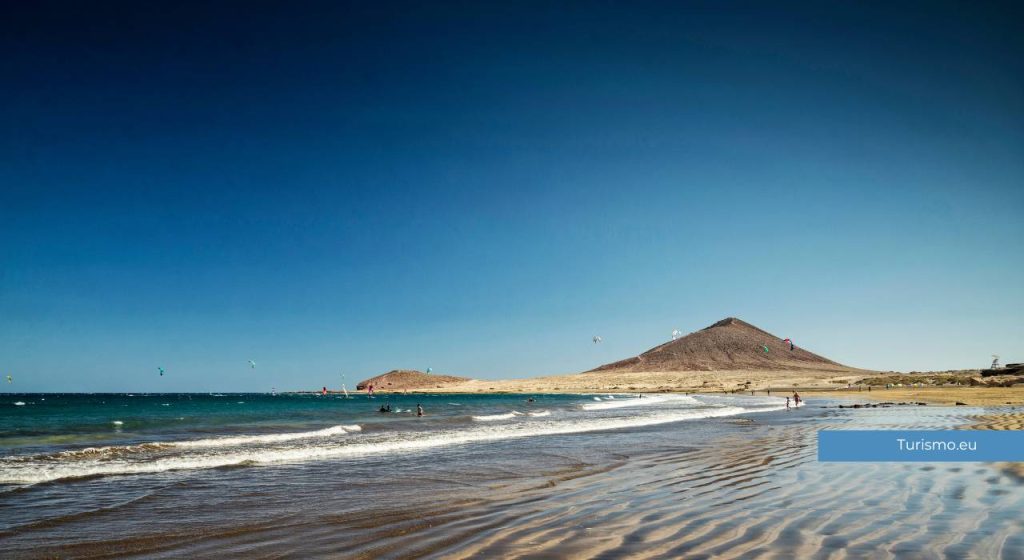
The south-eastern coast is more exposed to the wind than Costa Adeje and Los Cristianos. The landscape is more open, and its beaches are particularly popular with water-sports enthusiasts.
El Médano Beach
El Médano Beach extends alongside the town and is close to restaurants, shops and water-sports schools.
Wind is frequent, especially along the most exposed sections. This makes the beach particularly popular for windsurfing and kitesurfing, but less suitable for visitors looking for a sheltered stretch of sand and a wind-free day by the sea.
Playa de La Tejita
On the opposite side of Montaña Roja lies Playa de La Tejita, a long beach surrounded by less developed land.
It is one of the island’s widest beaches and retains a close connection with the volcanic landscape of the nature reserve. The wind can also be strong here, and the water is not always calm.
There is little natural shade, so visitors should bring drinking water and adequate sun protection, especially during the middle of the day.
The western coast: black sand and cliffs
Tenerife’s western coast combines tourist resorts, volcanic beaches and the immense rock walls of the Teno Massif.
Playa de Los Guíos
Playa de Los Guíos is a small dark-sand beach located beside the harbour at Los Gigantes.
Its most distinctive feature is its position beneath the cliffs dominating this part of the coast. Only a section of the cliffs can be seen from the beach; a boat trip provides a much clearer impression of their full height and scale.
The beach’s limited size and proximity to the harbour mean that it can become crowded during busy periods.
Playa de la Arena
Playa de la Arena, in Puerto de Santiago, is an urban beach of black volcanic sand surrounded by hotels, restaurants and landscaped areas.
It has visitor facilities and is easier to reach than the isolated beaches of the north. The sea can still be rough, however, and the presence of lifeguards does not remove the need to follow the warning flags.
Las Teresitas: golden sand near Santa Cruz
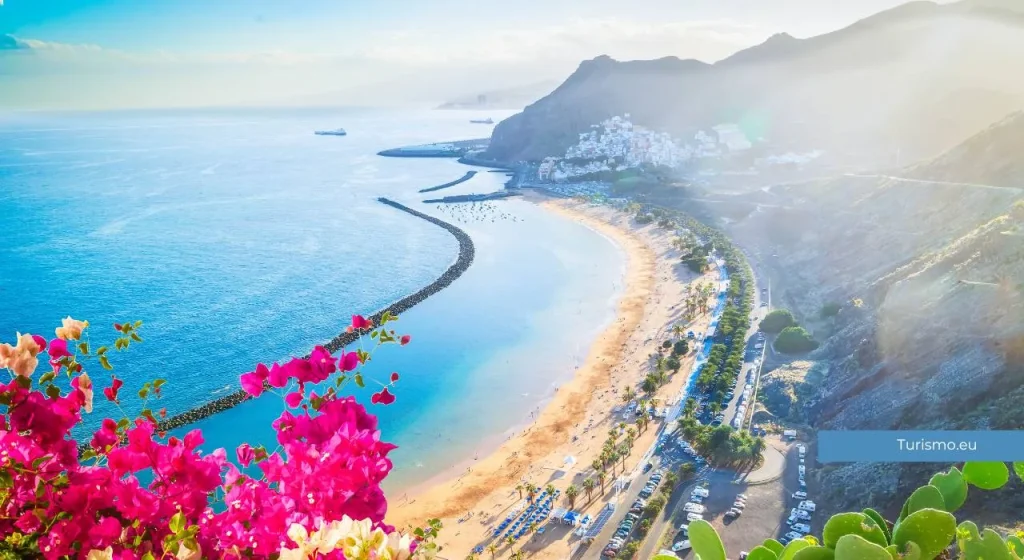
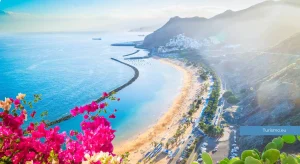
Playa de Las Teresitas lies beside the village of San Andrés, a few kilometres from Santa Cruz.
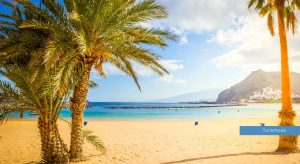
The beach was enlarged during the 1970s using sand brought from the Sahara. A breakwater built in front of the beach reduces the force of the waves and generally keeps the water calmer than at many other beaches on the north-eastern coast.
It is a spacious beach and is also popular with people living in the Santa Cruz metropolitan area. Its palm trees, the Anaga mountains and the nearby village of San Andrés create a setting quite different from the resorts in southern Tenerife.
The beach can become particularly busy at weekends and on public holidays.
The north: volcanic beaches and the open Atlantic
Tenerife’s northern coast is more exposed to the Atlantic. Its beaches often have black sand, stronger waves and conditions that can change quickly.
This does not mean that swimming is always impossible, but greater attention must be paid to currents, warning flags and instructions from lifeguards.
Playa Jardín
Playa Jardín is located in Puerto de la Cruz and consists of several stretches of volcanic sand.
The landscaped surroundings were designed by César Manrique and include gardens, paths and palm trees. Its proximity to the town centre makes the area easy to reach and provides access to several facilities.
The sea can be rough, and temporary bathing restrictions may be introduced. Visitors should check municipal notices and the warning flag before entering the water.
Playa del Bollullo
Playa del Bollullo lies on the coast of the Orotava Valley, surrounded by cliffs and banana plantations.
It is reached along a narrow road followed by a final section on foot with steps. A car park is available nearby, but access can still be difficult, especially on busy days.
The sand is black, and the sea can have strong waves and currents. The beach is worth visiting for its setting but should not be considered an easy swimming beach in all conditions.
Playa de Benijo
Benijo lies on the Anaga coast, facing the rocky formations rising from the Atlantic.
It is best known for its landscape of dark sand, mountains and offshore rocks. The sea is frequently rough, and currents can be strong.
Access to the beach is subject to closures because of the risk of falling rocks. Its current status should be checked with Santa Cruz de Tenerife City Council before travelling. Even when access is permitted, Benijo is not suitable for visitors looking for easy, sheltered swimming.
The natural pools of Garachico
El Caletón, on Garachico’s seafront, is a network of natural pools and channels formed by the lava flows that reached the ocean during the 1706 eruption.
It is not a beach in the usual sense but a bathing area created among volcanic rocks. Steps and walkways provide access to some of the pools.
The pools remain directly connected to the Atlantic. Strong waves can make swimming dangerous, and the area may be restricted or closed. Conditions should always be checked on arrival, and visitors should never enter the water when access is prohibited.
Which beach should you choose?
Those looking for facilities and generally sheltered water can choose Playa del Duque, Fañabé, Torviscas or Las Vistas.
Las Teresitas is a convenient alternative near Santa Cruz, while El Médano and La Tejita are better suited to visitors who do not mind windy conditions.
Playa de la Arena combines volcanic sand with a good range of facilities. Bollullo and Benijo offer more exposed landscapes but require greater caution and advance checks on access conditions.
Playa de Los Guíos is an interesting stop for views of the cliffs, although their scale is easier to appreciate from the sea. Swimming in the natural pools of Garachico is only advisable when the Atlantic is calm and access is permitted.
What to know before going to the beach
Atlantic conditions can change throughout the day. Even a protected beach may experience waves, wind or currents.
A red flag means that swimming is prohibited and must always be respected. Even greater caution is required at beaches without lifeguards.
Volcanic sand can become extremely hot in direct sunlight. Sandals or suitable footwear are useful for crossing the beach, while water shoes are mainly helpful in rocky areas and natural pools.
Before travelling to a more isolated beach, it is also worth checking for closures, road conditions and the local weather forecast.