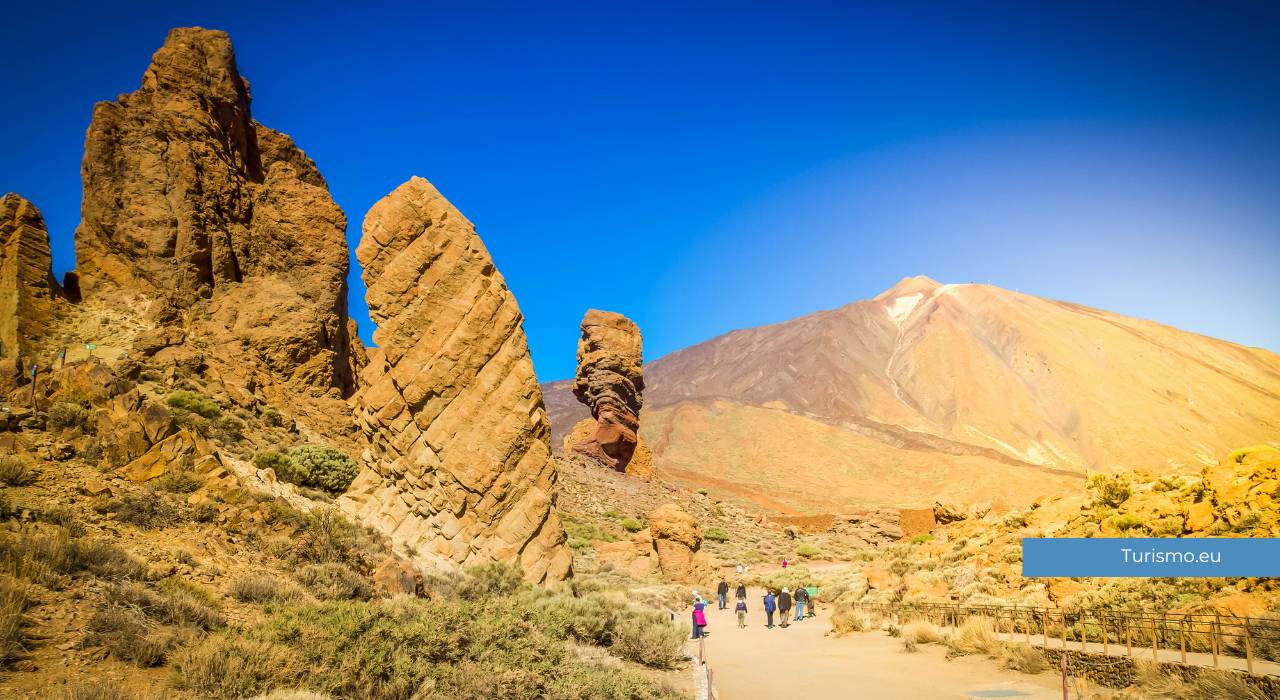


The largest island in the Canary archipelago, Tenerife has landscapes that change dramatically from north to south and a mountain peak that dominates the island.
Tenerife is an island of contrasts.
The south is dry, sunny and strongly oriented towards tourism. The north is greener and more humid, with historic towns and a rugged volcanic coastline. At the centre rises Mount Teide, Spain’s highest peak, which influences the climate and landscape of the entire island.
Within a relatively short distance, visitors can travel from a black-sand beach to a subtropical forest, or from a fishing village to a high-altitude volcanic plateau.
Mount Teide and the National Park
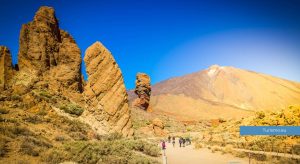
Mount Teide is Tenerife’s main natural landmark and can be seen from many parts of the island and, on clear days, from some of the neighbouring islands.
The surrounding national park is a UNESCO World Heritage Site. Its landscapes change with altitude, from the low-growing vegetation of the lower areas to the barren volcanic terrain around the summit.
Visitors can drive through the park and stop at its viewpoints and walking trails, or take the cable car to the upper station. Reaching the summit requires a separate permit, which should be requested well in advance because places are limited.
Even without climbing to the top, the park is worth visiting for its rock formations, lava fields and views from more than 2,000 metres above sea level.
The north: Anaga and its villages
Northern Tenerife is greener and less heavily developed than the main resorts in the south.
At the north-eastern end of the island, Anaga Rural Park protects an extensive area of laurel forest. Its trails pass through dense, humid vegetation and open onto sudden views of the Atlantic and the ravines descending towards the coast.
Small villages such as Taganana can also be found in this area, reached by narrow roads winding through the mountains. The landscape and atmosphere are very different from those of southern Tenerife.
Masca
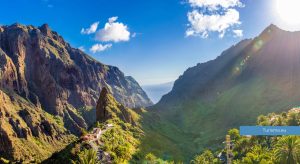
Masca is a small village set among the mountains of the Teno Massif in north-western Tenerife.
The road leading to it is narrow and winding, but the surrounding landscape of deep ravines, rocky peaks and distant ocean views is among the most striking on the island.
The village itself is small, with white houses and cultivated terraces built into the steep terrain.
Los Gigantes
On Tenerife’s western coast, the cliffs of Los Gigantes descend almost vertically into the Atlantic, reaching heights of up to approximately 600 metres in some places.
One of the best ways to appreciate their scale is from the sea, on a boat trip departing from the local harbour. The surrounding area also has dark volcanic beaches and natural pools formed among the rocks.
Las Teresitas Beach
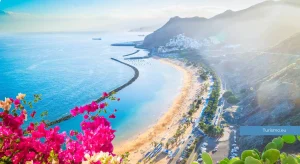
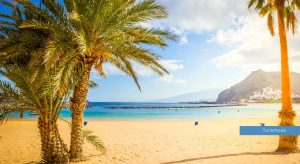
Close to Santa Cruz in north-eastern Tenerife, Las Teresitas is a golden-sand beach protected by a breakwater that generally keeps the water calmer than on many of the island’s natural beaches.
It is particularly popular with residents of the metropolitan area and has a different atmosphere from the large resorts in the south.
Tall palm trees, mountains in the background and the nearby fishing village of San Andrés give the beach a distinctive setting.
The ancient dragon tree of Icod de los Vinos
Icod de los Vinos is home to the Drago Milenario, the largest and best-known dragon tree in the Canary Islands.
Its exact age cannot be determined, although it is believed to be several hundred years old. Its dense, umbrella-shaped crown has made it one of Tenerife’s most recognisable natural symbols.
The surrounding town centre is pleasant to explore, with traditional buildings, small shops and opportunities to try wines produced on the island.
The south: beaches and Playa de las Américas
Southern Tenerife is the island’s main tourist area, with equipped beaches, hotels, restaurants and lively nightlife.
Playa de las Américas has the greatest concentration of bars and entertainment venues. It is convenient, well connected and suitable for travellers looking for beaches and a wide range of services.
Those who prefer quieter surroundings can consider other parts of the southern coast, including Los Cristianos, Costa Adeje and El Médano, each of which offers a different atmosphere.
When to visit Tenerife
Tenerife can be visited throughout the year, although conditions vary considerably across the island.
The south is generally drier and sunnier, particularly during winter. The north is cooler and more humid, with more frequent clouds and occasional rain.
The milder months are especially suitable for walking in Anaga, exploring the volcanic landscapes of the interior and visiting the island’s towns without the highest summer temperatures.