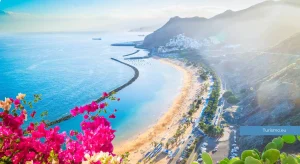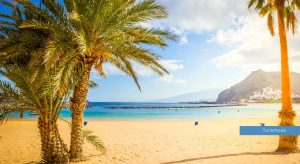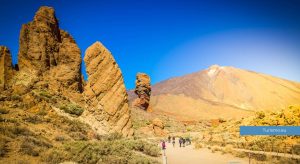
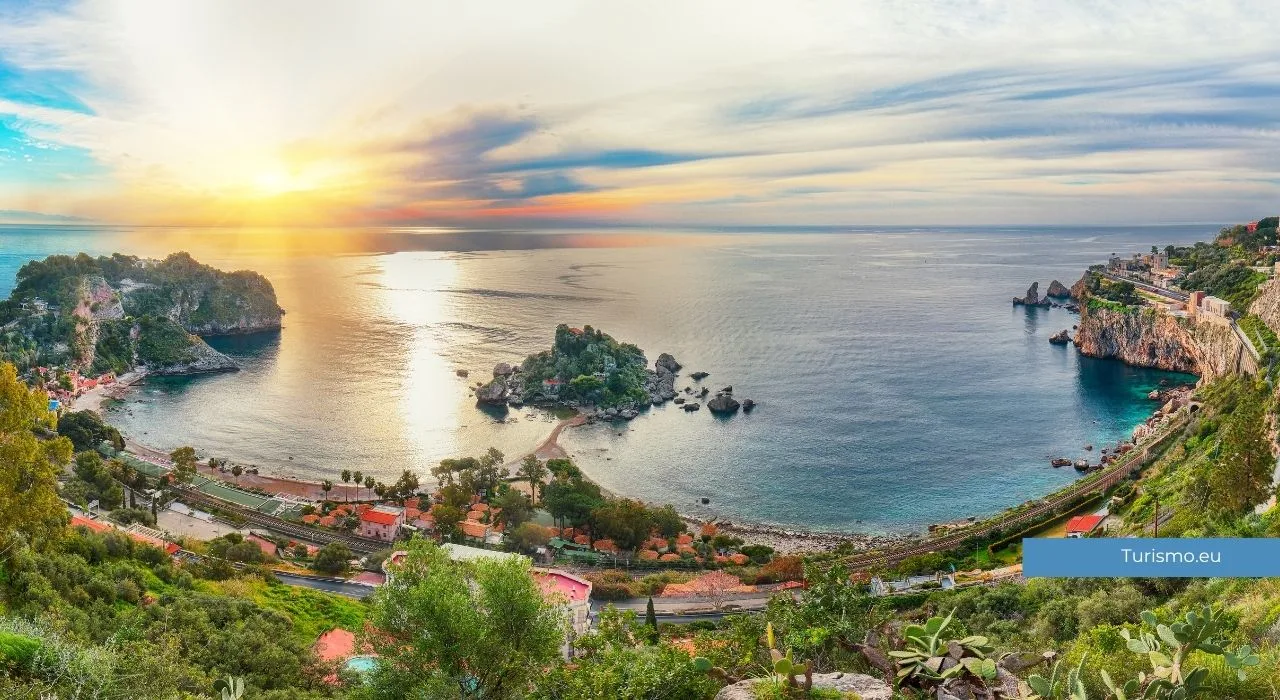


Taormina occupies a position that seems designed for looking into the distance. From the terraces of the town centre, the view stretches across the Ionian coast towards the Gulf of Giardini Naxos and, on clear days, the outline of Mount Etna.
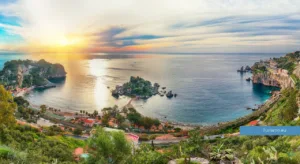
Below the town, beyond the hillside, the landscape changes. Mazzarò and Isola Bella overlook a coastline formed by small bays, rocky walls and pebble beaches. The historic centre and the sea are close in a straight line, but separated by a considerable difference in altitude that has shaped both the town and everyday life in Taormina.
Visiting this area therefore means moving between two different settings: the pedestrian streets, gardens and views of the upper town, and the bays reached by cable car or along the coastal road.
Taormina’s historic centre
The historic centre develops mainly along Corso Umberto, the pedestrian street connecting Porta Messina with Porta Catania.
This is the busiest part of the town, with shops, restaurants, panoramic terraces and some of its best-known buildings. It can become very crowded during the high season, particularly in the middle of the day and when organised groups arrive.
Moving away from the main street reveals stairways, covered passages and quieter lanes. These areas show the structure of Taormina more clearly, built on a hillside and adapted to the limited space between the mountain and the sea.
Piazza IX Aprile
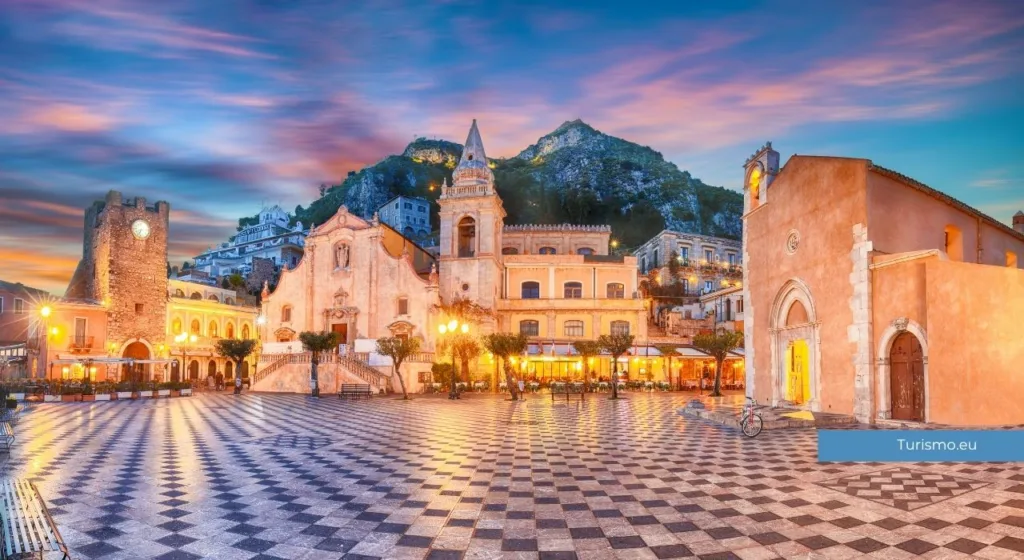
Piazza IX Aprile is one of the main viewpoints in the town centre. Its terrace overlooks the coast, with views extending towards Mount Etna and the Gulf of Giardini Naxos on clear days.
The chequered paving, Clock Tower and surrounding façades make it one of Taormina’s most recognisable spaces. It is busy throughout the day, while early morning and evening generally offer a more pleasant atmosphere.
The Ancient Theatre
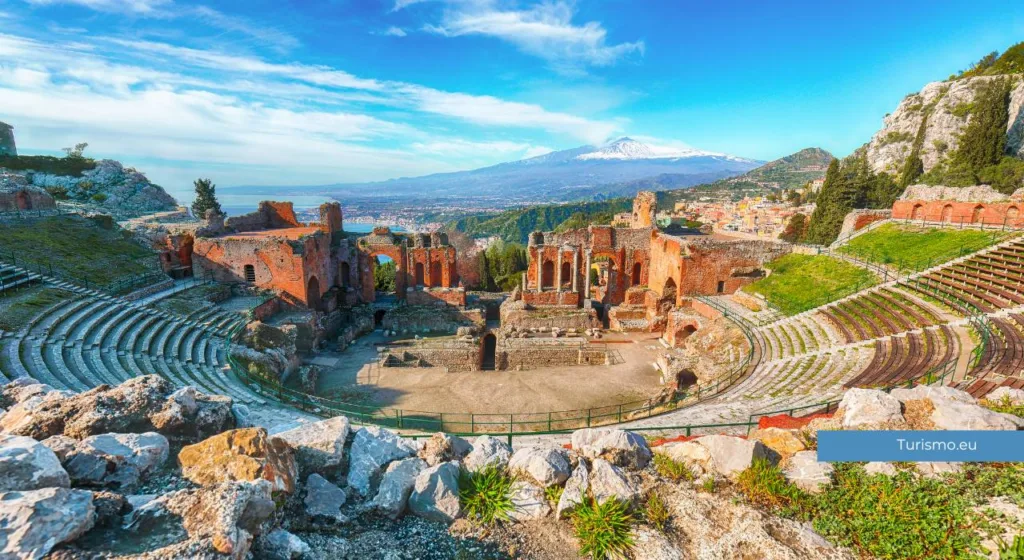
The Ancient Theatre is Taormina’s most important historic site. It was built during the Greek period and later enlarged and modified by the Romans.
Its location is an essential part of the visit. From the seating area and the openings in the stage building, visitors can see the sea, the coastline and, when visibility allows, Mount Etna.
It is best visited in the morning or late afternoon, when the light is less intense and visitor numbers may be lower. Opening hours, ticket prices and possible restrictions should be checked before the visit.
The Public Gardens
The Public Gardens occupy a panoramic area a short distance from Corso Umberto. They contain dense vegetation, shaded paths and unusual ornamental buildings constructed between the late 19th and early 20th centuries.
This is one of the few places in the centre where visitors can find shade and seating away from the busy shopping streets. Its terraces overlook the coast and the southern side of Taormina.
Mazzarò and the Taormina coast
Mazzarò lies directly below the historic centre and is connected to the upper town by cable car.
The bay is small and enclosed by rocky walls. Its beach consists mainly of pebbles and includes beach clubs, restaurants and accommodation.
Public space can be limited, especially during summer. Visitors planning to spend a few hours by the sea should arrive in the morning and bring suitable footwear for walking on the pebbles.
Mazzarò is a convenient base for those who want to stay near the sea while retaining a quick connection with the town centre. It does not, however, offer the width and continuity of resorts developed along longer beaches.
Isola Bella
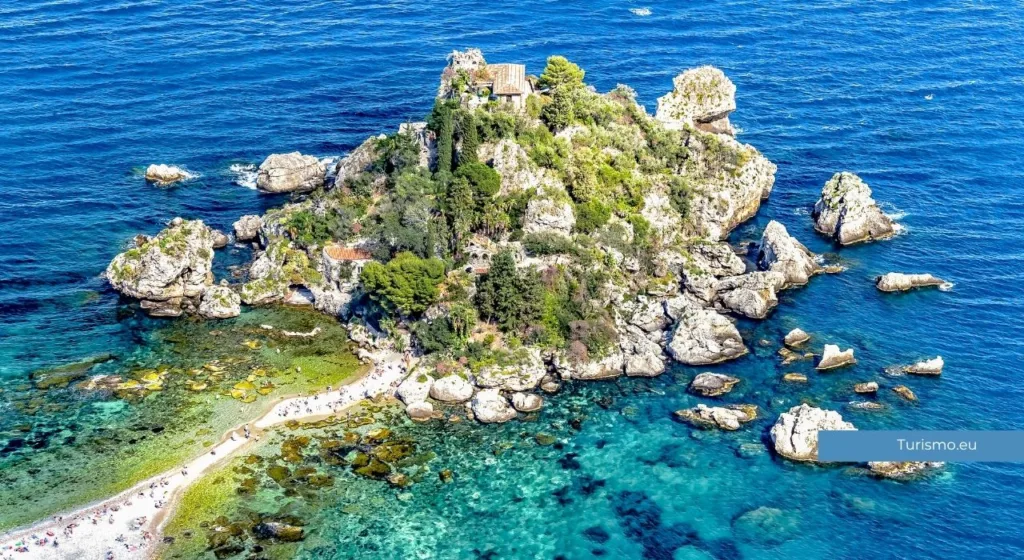
South of Mazzarò lies Isola Bella, a small rocky island connected to the coast by a narrow strip of sand and pebbles.
The beach facing Isola Bella is well known and fills quickly during summer. It consists mainly of pebbles and includes both public sections and areas occupied by beach clubs.
The rocky seabed and often clear water make the bay appealing for swimming and observing the coastline. Visitors should nevertheless pay attention to boats and respect any restrictions established within the nature reserve.
Capo Sant’Andrea and boat trips
Capo Sant’Andrea separates Mazzarò Bay from Isola Bella. Its rocky walls, small caves and inlets are easier to appreciate from the sea.
Boat trips of varying length depart from the coast. Some remain within the bays around Taormina, while others continue to Giardini Naxos or cover a longer section of the coastline.
Before choosing a trip, it is worth checking the number of passengers, its actual duration, the planned stops and the sea conditions. Smaller boats can often approach the caves more closely but are also more affected by waves.
Other beaches nearby
Mazzarò and Isola Bella are the best-known coastal areas, but they are not the only options for spending a day by the sea.
Spisone and Mazzeo
Spisone and Mazzeo lie north of Mazzarò. Their beaches are longer and more open than the bays at the foot of Taormina.
Mazzeo continues almost uninterrupted towards Letojanni and offers more space, beach clubs, bars and restaurants. It is a practical choice for visitors who want to spend more time on the beach without dealing with the stairways and limited space of Isola Bella.
Giardini Naxos
South of Taormina lies Giardini Naxos, with a seafront promenade, several beaches and a wider range of accommodation directly on the coast.
Taormina’s historic centre can still be reached by bus or car, although summer traffic can considerably increase journey times.
Giardini Naxos can be a suitable base for travellers who give greater priority to the sea and prefer to stay in a flatter resort.
The cable car between Taormina and Mazzarò
The cable car is the most practical connection between the historic centre and the coast. The upper station is near Porta Messina, while the lower station is in Mazzarò.
The journey takes only a few minutes and avoids the winding road and the difficulty of finding parking near the beaches. From the lower station, Isola Bella can be reached by walking along the road and descending a flight of steps.
Operating hours and fares change during the year. The cable car may also close temporarily for maintenance or because of weather conditions; in these cases, a replacement bus service may operate.
It is therefore advisable to check that the cable car is running before planning the day, particularly outside the main season.
Where to stay in Taormina: historic centre or coast?
Staying in the historic centre makes it possible to go out on foot in the evening, reach the Ancient Theatre easily and enjoy Taormina after sunset. Some accommodation in the centre can be difficult to reach by car, however. It is worth checking the distance from the nearest car park, the presence of steps and whether a luggage transfer service is available.
Mazzarò is better suited to travellers who want to stay close to the sea and use the cable car to reach the centre. The choice of restaurants and shops is more limited than in the upper town.
Giardini Naxos, Mazzeo and Letojanni often provide a greater choice of accommodation and longer beaches. They do, however, require a journey to visit Taormina.
The decision therefore depends on the priorities of the trip: the historic centre and evening atmosphere in the upper town, or the sea and immediate access to the beach along the coast.
How to get there and where to park
Taormina-Giardini railway station lies on the coast below the historic centre. From the station, visitors need to continue by bus or taxi.
Those arriving by car should avoid searching for parking in the central streets. Taormina has several multi-storey car parks connected to the centre on foot or by shuttle bus. For the coastal area, there is a car park in Mazzarò near the lower cable-car station.
During the high season, the car parks can fill and traffic along the coastal road becomes heavy. Arriving in the morning and using public transport can reduce some of these difficulties.