

On the eastern coast of Sicily, Syracuse contains two very different areas that reveal more than two thousand years of the city’s history. One is Ortigia, the island where the first Greek settlement was founded, with ancient temples incorporated into later buildings, Baroque architecture and streets overlooking the sea. The other is Neapolis, home to the Greek Theatre, ancient stone quarries and some of the most important remains of the classical city.
Founded by Greek settlers from Corinth in the 8th century BC, Syracuse became one of the most important cities in the ancient Mediterranean. Its heritage includes Greek, Roman, early Christian, medieval and Baroque remains.
Since 2005, Syracuse and the Rock-Cut Necropolis of Pantalica have been included on the UNESCO World Heritage List.
For a first visit, it is advisable to spend at least two days in the city, visiting Ortigia and the Neapolis Archaeological Park on separate days.
Ortigia, the historic centre of Syracuse
Ortigia is a small island connected to the mainland by two bridges and forms the historic centre of Syracuse.
Distances are short, and walking is the best way to explore it. The route crosses squares, narrow streets, Baroque buildings and stretches of seafront, while also revealing traces of much earlier periods.
Temple of Apollo
Shortly after crossing the bridges leading to Ortigia, visitors reach the Temple of Apollo, one of the oldest Doric temples in Sicily.
The building was transformed and used for different purposes over the centuries. Parts of its columns and base survive within the present archaeological area.
Piazza Duomo and the cathedral
Piazza Duomo is the monumental centre of Ortigia. Its present appearance is predominantly Baroque and largely reflects the reconstruction carried out after the earthquake of 1693.
The Cathedral of Syracuse, however, incorporates a much older structure: it was built around the ancient Greek Temple of Athena. Its Doric columns remain clearly visible along the side walls of the building.
Several historic palaces and the Church of Santa Lucia alla Badia also overlook the square.
Fountain of Arethusa
Continuing towards the sea leads to the Fountain of Arethusa, a freshwater spring situated only a few metres from the coast.
The spring is associated with the Greek myth of Arethusa and Alpheus and is also one of the places in Syracuse where papyrus grows.
From here, the walk can continue along Ortigia’s western seafront towards the southern end of the island.
Maniace Castle
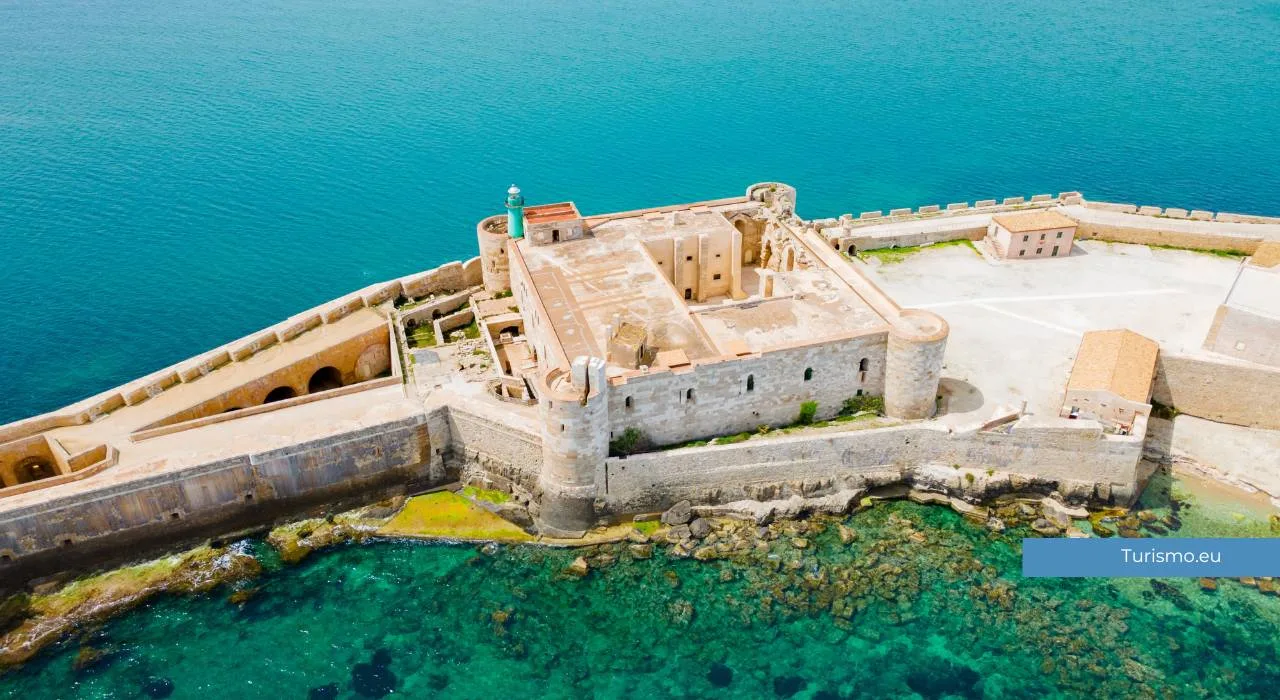
At the tip of Ortigia stands Maniace Castle, built in the 13th century during the reign of Frederick II.
The fortress occupies a strategic position at the entrance to the Porto Grande and is one of the city’s principal examples of medieval military architecture.
A visit also provides a clearer view of the relationship between Ortigia, the harbour and the Syracuse coastline.
Ortigia Market
Near the entrance to the island is Ortigia Market, which is at its busiest during the morning.
Fish, fruit, vegetables, cheese and preserved foods fill the stalls around Via De Benedictis. It is a useful place to become familiar with local ingredients and products before continuing into the historic centre.
The surrounding streets also contain small food shops and places to stop for lunch.
Palazzo Bellomo Museum
In the southern part of Ortigia, the Regional Gallery of Palazzo Bellomo occupies a building of medieval origin.
Its collections contain works from Syracuse and south-eastern Sicily, concentrating mainly on the medieval and early modern periods.
The museum can be included in a full day devoted to Ortigia, particularly for visitors interested in the city’s artistic history beyond its principal monuments.
Neapolis Archaeological Park
The second major area to visit in Syracuse lies on the mainland, several kilometres from Ortigia.
The Neapolis Archaeological Park contains some of the most important monuments from Greek and Roman Syracuse. Allow at least a few hours for the visit and, particularly during the warmer months, avoid the middle of the day.
Greek Theatre
The Greek Theatre of Syracuse is one of the park’s principal monuments. Much of its seating area was carved directly into the rock of the Temenite hill.
The theatre was altered several times over the centuries and is still used for performances, particularly during the season of classical plays.
Temporary stages and equipment may therefore partly alter the appearance of the monument at certain times of year.
Latomia del Paradiso and the Ear of Dionysius
The latomie were large quarries from which stone was extracted to build the city.
The best known is the Latomia del Paradiso, now covered by much denser vegetation than it would have had in ancient times.
Within it is the Ear of Dionysius, a tall, narrow artificial cave noted for its unusual acoustics. The name was given to the cave by Caravaggio during his stay in Syracuse in the early 17th century.
Altar of Hieron II and Roman Amphitheatre
The archaeological area also contains the Altar of Hieron II, an enormous structure built during the Hellenistic period and used for public ceremonies.
The Roman Amphitheatre belongs to a later phase in the city’s history and reflects the changes Syracuse underwent under Roman rule.
Paolo Orsi Regional Archaeological Museum
Not far from Neapolis stands the Paolo Orsi Regional Archaeological Museum, which houses finds from Syracuse and numerous archaeological sites across eastern Sicily.
The collections cover a very broad period, from prehistory to the Greek and Roman eras, and provide useful context for the monuments within the archaeological park.
The museum is extensive. On a two-day visit, seeing it immediately after completing the whole Neapolis route may be tiring. With an additional day, it can be explored at a more reasonable pace.
Catacombs of San Giovanni
The Catacombs of San Giovanni, which developed mainly between the 4th and 6th centuries, are located in the same part of the city.
The underground complex contains galleries, burial spaces and chambers that also made use of earlier structures.
At ground level are the remains of the Basilica of San Giovanni Evangelista and the entrance to the Crypt of San Marciano, connected with the Christian tradition of Syracuse.
Opening times and visiting arrangements may change during the year, so they should be checked before planning the visit.
Syracuse in one day
With only one day available, it is best not to include too many separate attractions.
The morning can be devoted to the Neapolis Archaeological Park, arriving early, particularly in summer. In the afternoon, head to Ortigia and walk from the Temple of Apollo to Piazza Duomo, the Fountain of Arethusa and Maniace Castle.
The evening is the best time to continue on foot along the seafront and through the streets of the historic centre.
This is a fairly demanding programme and necessarily leaves out museums and other archaeological sites.
Syracuse in two days
Two days make it possible to separate the city’s two principal areas.
Day one: Ortigia
The first day can be devoted to Ortigia, beginning at the market and the Temple of Apollo before continuing towards Piazza Duomo.
In the afternoon, visit the Fountain of Arethusa, Palazzo Bellomo and Maniace Castle, while leaving enough time to walk along the seafront.
Day two: Neapolis and the archaeological area
Begin the second day at the Neapolis Archaeological Park, allowing several hours for the Greek Theatre, the stone quarries and the other monuments.
Afterwards, choose between the Paolo Orsi Museum and the Catacombs of San Giovanni rather than attempting to fit too many visits into the same afternoon.
Syracuse in three days
A third day makes it possible to explore the city in greater depth or visit one of the surrounding areas.
Options include Euryalus Castle, an important fortification of ancient Syracuse, or the area around the River Ciane, known for the spontaneous growth of papyrus.
Alternatively, Syracuse can be used as a base for visiting Noto, around 40 kilometres to the south, or for continuing along the south-eastern coast towards the Vendicari Nature Reserve.
Getting between Ortigia and Neapolis
Ortigia is easily explored on foot, and using a car within the historic centre is generally unnecessary.
The Neapolis Archaeological Park is located on the mainland and should not be considered a simple continuation of a walk around Ortigia. To organise the day effectively, treat the two areas as separate visits.
Visitors arriving by car should also consider traffic restrictions and parking availability around Ortigia.
When to visit Syracuse
Spring and autumn are particularly suitable for exploring Syracuse on foot and spending several hours in its archaeological areas.
Summer temperatures can be high, especially in Neapolis. It is therefore advisable to visit the park in the morning and leave Ortigia for the late afternoon and evening.
Summer does, however, make it easier to combine the city with the beaches and nature reserves along the south-eastern coast.
Winter can also work well for a mainly cultural trip, although days are shorter and rain is more likely.
How long to spend in Syracuse
Two days provide a good balance for a first visit: one for Ortigia and another for Neapolis and the other sites on the mainland.
With three days, visitors can add the Paolo Orsi Museum, the catacombs or an excursion outside the city without concentrating too many attractions into a single day.
Syracuse can also serve as a practical base for exploring south-eastern Sicily, including Noto and the Vendicari Nature Reserve.