Istanbul is less one city than a loose federation of neighbourhoods spread across two continents, stitched together by ferries and by a tram line that never seems to have a free seat. Where you sleep shapes the whole trip. Stay in the right district and the sights, the restaurants and the ferry piers fall naturally into your days; stay in a less convenient one and you could lose an hour each morning to traffic.
The good news: there are only a handful of areas that really suit a first visit, and each has a clear personality.
A quick word on getting in
Istanbul has two airports, and they sit on opposite sides of the city. Istanbul Airport (IST), where many international flights land, lies around 40 km (25 miles) northwest of the historic centre, while Sabiha Gökçen (SAW) sits on the Asian side, about 45 km from Sultanahmet.
A pre-booked transfer from Istanbul Airport to the city centre can take anywhere from 45 minutes to an hour and a half, depending on traffic and district, with the driver meeting you at the designated pickup point and the price agreed in advance. The M11 metro and Havaist coaches are generally cheaper alternatives from IST, although reaching your hotel may require a connection.
Whichever you choose, it helps to know roughly where you’re headed. Several of the neighbourhoods below have narrow, steep or pedestrianised streets where a car can only drop you at the corner.
Sultanahmet, for the sights
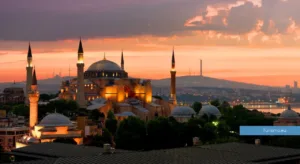
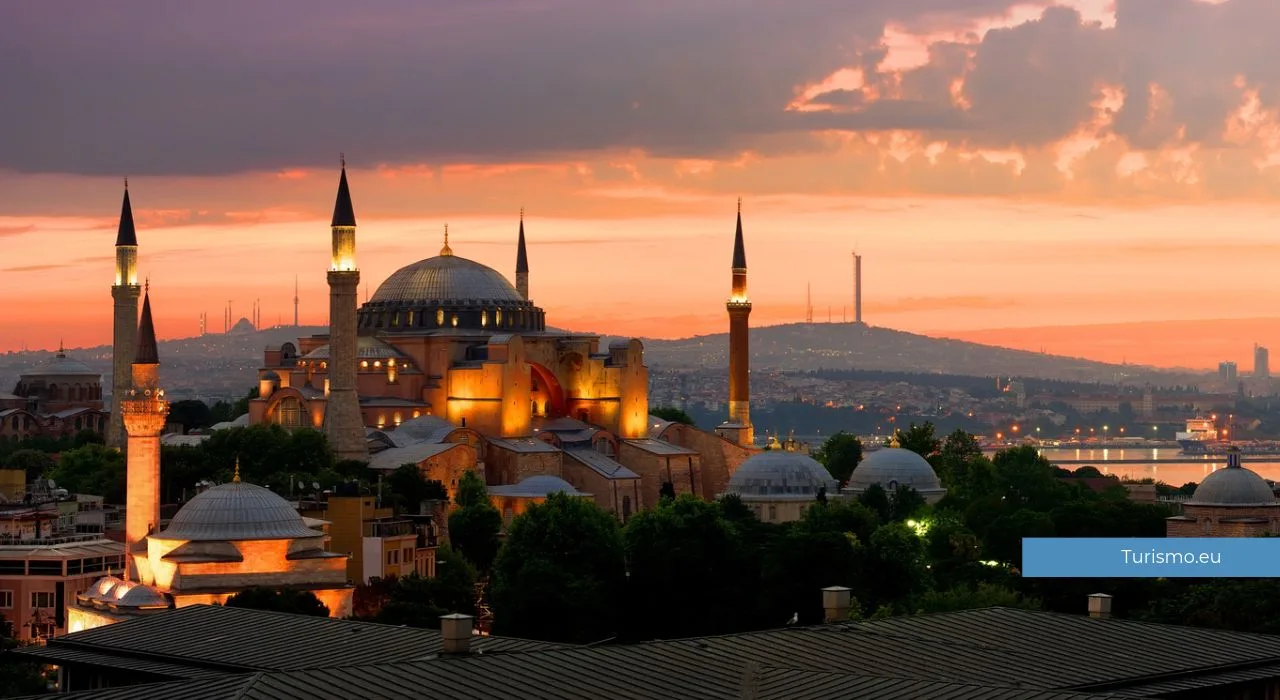
If the main reason for your trip is the Hagia Sophia, the Blue Mosque and Topkapı Palace, Sultanahmet is the obvious base. All three sit within a short walk of each other, along with the Basilica Cistern and the Grand Bazaar a little further west. You can visit the major sights early in the morning and return to your hotel for a break in the afternoon.
The trade-off is atmosphere after dark. Once the tour groups leave, Sultanahmet tends to go quiet, and many restaurants here cater primarily to visitors, with multilingual menus and prices to match. Rooms are often found in small hotels housed in restored historic buildings, which can be lovely, though some have steep stairs and no lift.
It’s a good choice for a first visit of three or four days. For a longer stay, you might find it a little sleepy.
Sirkeci and Eminönü, just down the hill
Sirkeci and Eminönü sit right below Sultanahmet, on the shore where the old city meets the Golden Horn. They’re louder and busier, with a strong everyday commercial atmosphere. This is where commuters pour off the ferries, where the Spice Bazaar spills out into streets of nut sellers and kitchenware shops, and where fishermen line the Galata Bridge from dawn.
Hotels here can be cheaper than in Sultanahmet, and many of the historic sights are still within walking distance, although the uphill walk takes a little longer.
The ferry piers make it an excellent base for exploring. From Eminönü, boats cross to Kadıköy and Üsküdar on the Asian side, while Bosphorus cruises also depart from the waterfront.
Beyoğlu and its three corners
Across the Golden Horn, Beyoğlu is one of Istanbul’s most varied districts. It’s a hilly, layered place of 19th-century apartment buildings, steep cobbled lanes and rooftop bars, and it splits into several mini-neighbourhoods worth knowing.
Galata, around the medieval Galata Tower, is pretty and central, with boutique hotels, vintage shops and some of the best views over the old city.
Karaköy, right on the waterfront below, has turned from a district of hardware shops and warehouses into one of the city’s liveliest dining areas, with tram and ferry links on its doorstep.
Cihangir, up the hill towards Taksim, is a residential pocket of cafés and cats, popular with writers, artists and international residents.
Of the three, Karaköy is often the most practical choice for a first visit: it’s close to several major attractions, well connected by public transport, and the T1 tram crosses the Galata Bridge towards Sultanahmet in around 15 minutes.
Taksim and İstiklal Avenue
Taksim Square sits at the top of Beyoğlu, and İstiklal Avenue runs south from it for around 1.4 km (just under a mile), a pedestrian street of shops and cinemas, old churches and arcades that’s packed from late morning until well after midnight.
It’s lively and well connected, with the metro, the funicular down to Kabataş and buses in several directions. Hotels range from international chains to small, budget places in the side streets.
The downside is noise. Taksim never really sleeps, and some streets around the square can be particularly busy at night. If you stay here, choose a hotel on a quieter street a few blocks away from the square itself.
Beşiktaş and Nişantaşı
North of Taksim, along the European shore of the Bosphorus, Beşiktaş is a busy, student-heavy district with a thriving market, affordable restaurants and a big football club whose fans make themselves heard on match days.
Dolmabahçe Palace sits on the waterfront nearby, and ferry connections make it easy to reach several destinations on the Asian side.
Nişantaşı, just inland, is one of the city’s main upscale shopping districts, with designer boutiques, polished cafés and a wide choice of restaurants. It suits travellers who want comfort and a somewhat quieter setting away from the busiest tourist areas.
You’ll need public transport or a taxi to reach the old city. Allow at least 30 minutes, and longer during busy periods.
Kadıköy, on the Asian side
Many visitors never cross the Bosphorus at all, which is a shame.
Kadıköy, reached by ferry from Eminönü or Karaköy, is a lively district with a strong local food and nightlife scene. Its food market is one of the most interesting in the city, the bar streets fill with students and young professionals, and the seafront promenade at Moda is a favourite place to watch the sun set over the old city’s skyline.
Staying here gives you a commute by ferry, which is genuinely one of the pleasures of Istanbul: a glass of çay (tea) on deck, gulls wheeling overhead, the domes of the old city sliding into view.
It’s also convenient if you’re flying from Sabiha Gökçen. But if you only have two or three days and want to concentrate on the major historic sights, the daily crossing can eat into your time.
Balat and Fener, for character
Balat and Fener lie up the Golden Horn from the old city. They’re historic neighbourhoods associated with Istanbul’s Greek Orthodox and Jewish communities, known for colourful houses, antique shops, old churches and an increasing number of cafés and small guesthouses.
They’re photogenic and generally quieter than the main tourist areas, although some streets have become popular with visitors.
The T5 tram runs along the Golden Horn, making the area easier to reach than it once was. However, accommodation choices are more limited than in the central districts, and evening dining options can be fewer.
Feel free to visit for half a day even if you stay elsewhere. It’s one of the most rewarding areas to explore on foot.
What it costs
Accommodation prices depend on the season, the type of property and its exact location.
Small family-run hotels in Sultanahmet and Sirkeci can offer good value for couples, particularly outside the busiest travel periods. Boutique places in Galata and Karaköy often charge more for design, location and views.
The grand hotels along the Bosphorus in Beşiktaş and the international chains around Taksim and Nişantaşı generally sit at the higher end of the range, although more affordable options can be found in most districts.
April, May, September and October are popular months, so booking early is advisable. Summer can be hot and busy, while winter often brings lower accommodation rates, colder weather and a different atmosphere.
Areas to think twice about
Laleli and Aksaray, west of the Grand Bazaar, are busy commercial areas with wholesale textile shops and numerous budget hotels.
They can be convenient for travellers looking for affordable accommodation and good transport connections, but the surroundings may feel less appealing to those visiting Istanbul primarily for sightseeing.
Similarly, accommodation around Tarlabaşı, just west of İstiklal Avenue, deserves some research before booking. The neighbourhood is undergoing changes, and conditions can vary considerably from one street to another.
In both cases, check the exact hotel location, recent reviews and transport connections rather than choosing solely on price.
Which area suits whom
For a short first trip focused on the classic sights, stay in Sultanahmet or Sirkeci.
For food and nightlife, or for a sense of how the city lives now, pick Karaköy, Galata or Cihangir.
For comfort and shopping, Nişantaşı.
For a stay with a more residential atmosphere and daily ferry rides, Kadıköy.
And for families with young children, the central location and short distances between major attractions can make Sultanahmet a practical base, although it’s worth checking the hotel’s accessibility and the surrounding streets before booking.