

Among golden dunes and constant wind, Corralejo is the perfect base for exploring the north of Fuerteventura, and also the centre and south of the island if you have enough time. I lived there for several years and I know what is genuinely worth seeing.
In Corralejo you will find a large community of Italians who have come to live and open businesses, so don’t be surprised if you often hear your own language spoken. The upside is that you will have no trouble making yourself understood — by now even the Spanish understand Italian 😄 — the downside is that you won’t exactly feel far from home.
That said, if you need it, there is no shortage of wide, wild spaces where you can completely disconnect and feel the energy of the island.
So my advice is: don’t overthink it… y disfruta!
Where Corralejo Is
Corralejo sits at the northernmost tip of Fuerteventura. Once a fishing village, it is now one of the most lively areas on the island, particularly popular with surfers, digital nomads and independent travellers.
From the port, daily ferries depart for Lanzarote (20 minutes) and for Isla de Lobos, a small nature reserve that can be visited in a day.
Why Choose Corralejo
It is close to the stunning dunes (Parque Natural de las Dunas), lively and touristy without being chaotic, has good accommodation at reasonable prices, excellent food — especially fish — at good value, and it works perfectly as a base for exploring the whole north of the island. The south is also doable with a day trip.
What to See in Corralejo and the Surroundings
The Dunes

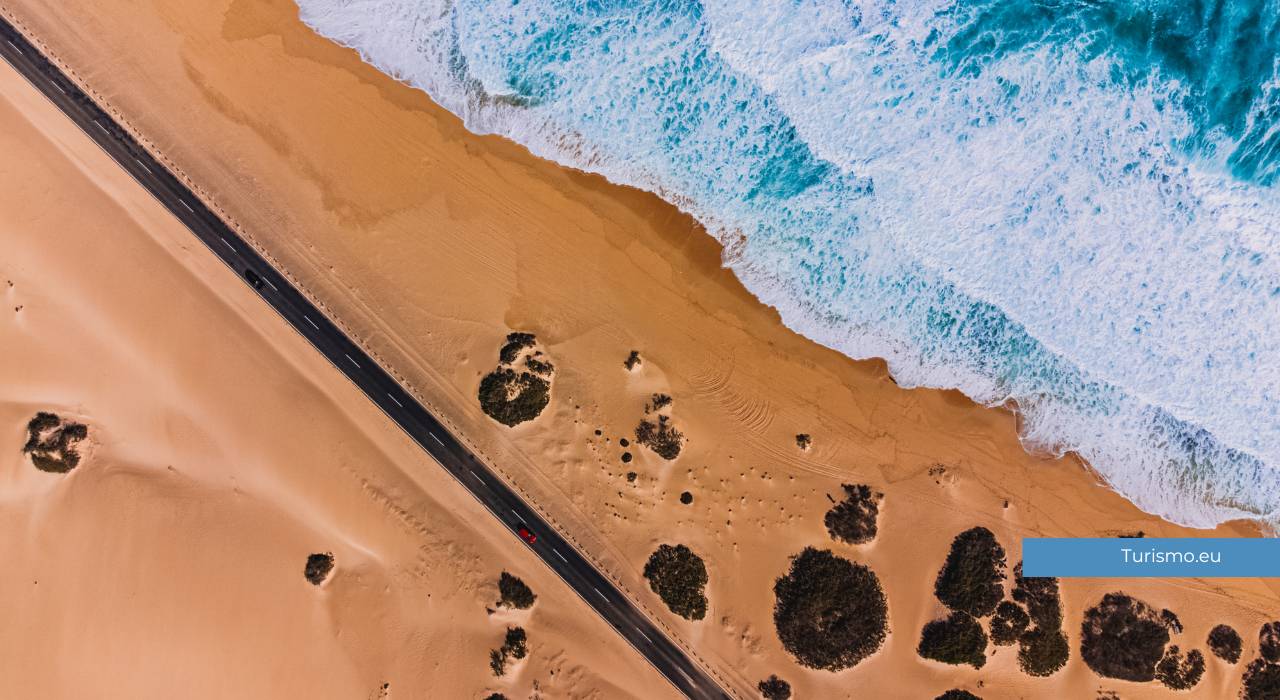
Imagine desert dunes that fade into the ocean. The dunes of Corralejo are a surreal and extraordinary landscape. You can reach them on foot, by bike or by local bus. A walk through the dunes is highly recommended — head to the point furthest from the road and listen to the silence of nature. At sunrise or sunset the light is something special.
The Beaches
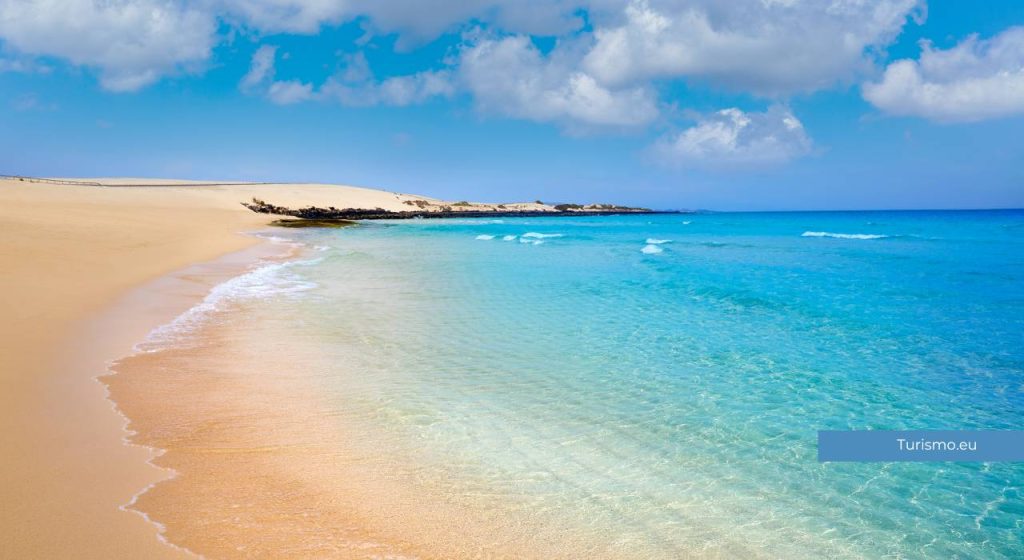
Las Grandes Playas are the beaches on the other side of the road from the natural park of the dunes. Some are completely wild; others, in the area around the Riu hotels, are set up with sunbeds and affordable umbrellas — a few of them, thankfully, nothing like the packed Italian beach clubs — and free shower facilities.
They are ideal both for learning to surf (you will see many surf schools practising here) and for experienced riders. The area is a well-known surf spot, a genuine haven for surfers. Windsurfing and kitesurfing are also very popular.
It is a great area for long walks or for rolling down the dunes — children love it.
There are also beaches right in the centre, at Muelle Chico, Hoplaco and Waikiki, perfectly central and very convenient if you don’t have a car, plus the Sunset Bar beach, very popular for a sundowner drink.
Isla de Lobos
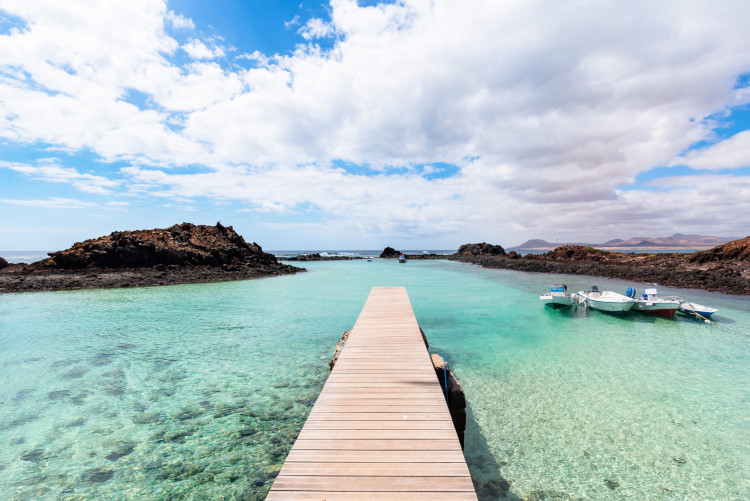
Lobos is a small uninhabited island just off Corralejo. You reach it by glass-bottomed boat — you need to book a permit in advance — and at the port you will find companies that organise the crossing at accessible prices.
Catamaran excursions are also excellent, as is reaching Lobos by kayak; you can choose on the spot according to your preference.
Once on Lobos you will find desert trails, a bay of crystal-clear water, a lighthouse overlooking the ocean and the crater of an extinct volcano. I recommend booking in advance and eating paella at the island’s only restaurant.
Historic Centre and Port (Muelle)
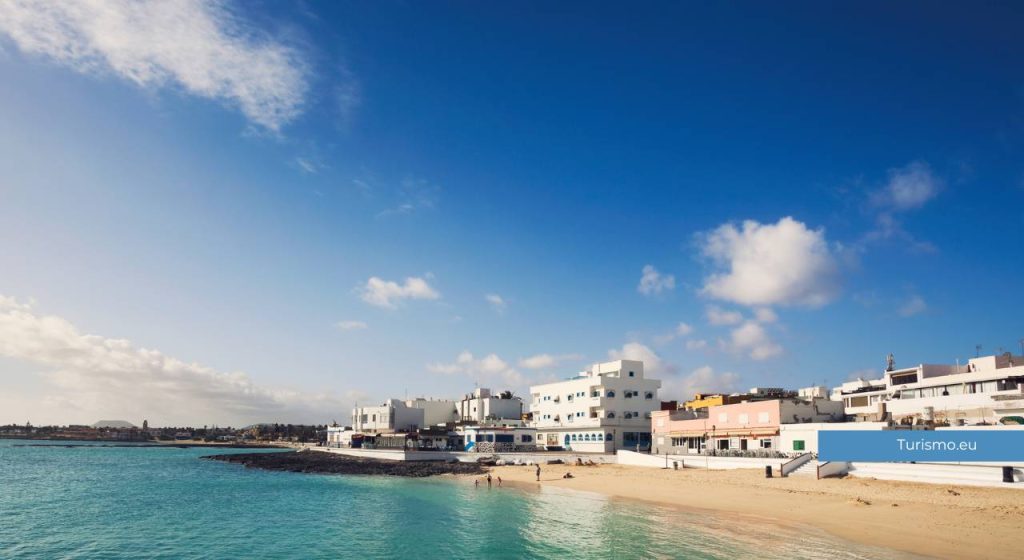
The oldest part of Corralejo still has genuinely characterful corners. A walk through the streets near the port at sunset is well worth it.
Muelle Chico is a great spot to sit and watch the boats and the sea, and also ideal for a beach day with children — the water is very safe and sheltered from the wind.
The Volcanoes
The nearest volcano is Morro Francisco, reachable on foot — but be warned, if there is wind in town, up on the volcano there is three times as much, so judge accordingly and take care.
Walking along the dirt road of Las Calderas you will find more volcanoes, leading up to the Calderón Hondo near Lajares, which is a safer and easier destination.
What to Do in Corralejo
Surf, windsurf and kite: schools everywhere, for all levels. Trekking along the volcano trail. Yoga and meditation: many alternative centres and retreats. Coworking and remote work: well-equipped spaces. Boat trips to see dolphins in their natural habitat.
Where to Eat (tried and recommended)
La Cofradía de Pescadores — fresh fish right on the waterfront, a classic.
Casa Manolo — typical local tapas in a simple setting.
Baobab — superb vegan dishes and desserts, made with real skill and care.
Gelatería El Gusto — the best ice cream on the island…
Ristorante El Horno a Villaverde — excellent food, not touristy at all, 15 minutes by car.
For Families
In the centre of Corralejo there is a lively small playground for younger children, and the Acua Water Park for all ages — though I would only recommend it for a longer stay; for a week, the beach is a better way to spend your time.
When to Go
The climate is mild all year round, but the best period runs from April to December, with temperatures between 24°C and 30°C and very little rain.
My Advice
If you can, come to Corralejo between September and December, or between April and June. The island quietens down a little, the wind is gentler, and you can experience the real soul of the place.
Don’t be put off by the first impression of tourism: Corralejo has a living, local character — if you know how to listen for it.
Practical Information
The airport is at Puerto del Rosario (FUE) — 35 minutes by car.
Renting a car is highly recommended for exploring the island properly, though local buses are also an option. You can hire a car at the airport on arrival, but booking in advance is advisable to avoid finding nothing available. Check Autoreisen.com and Cicar — the most affordable options with no hidden surprises.
The climate is dry and windy for most of the year, cooler and cloudier between January and March. Bring comfortable shoes for the volcanic trails.
One-Week Itinerary
Day 1: Relax at Grandes Playas and explore the town centre.
Day 2: Excursion to Isla de Lobos.
Day 3: Hike to Calderón Hondo near Lajares.
Day 4: Surf or beach day at El Cotillo (20 minutes by car) and sunset at Piedra Playa.
Day 5: Day trip to the south of the island — don’t miss Sotavento beach or Cofete (not suitable for swimming).
Day 6: Trip to Ajuy to see the black sand beach and the sea caves, returning via Betancuria, the island’s ancient capital.
Day 7: Trip to Puerto del Rosario and Las Salinas.